DATA 609 Meetup 15: Deep Learning

George I. Hagstrom

Week Summary

  • Last Week and Last Meetup
  • Project and HW 7 Due Next Sunday
  • Talk about Deep Learning today

What is Deep Learning?

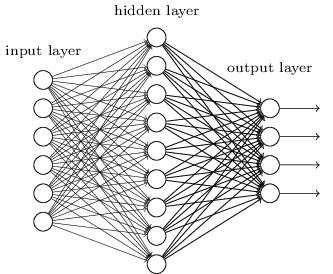
  • Networks we implemented last week had one hidden layer Nielson

What is Deep Learning?

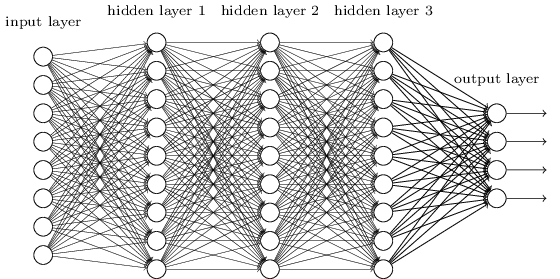
  • But you can use more layers Nielson

Empirical Advantage

  • Over time, networks have become deeper
  • Empirically, they lead to higher accuracy
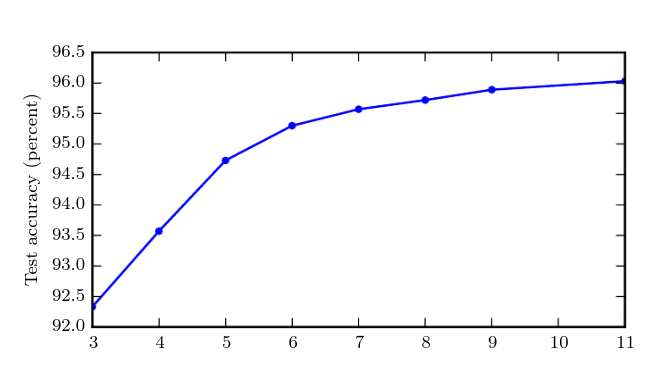
Goodfellow et al

Empirical Advantage

  • Over time, networks have become deeper
  • Empirically, they lead to higher accuracy
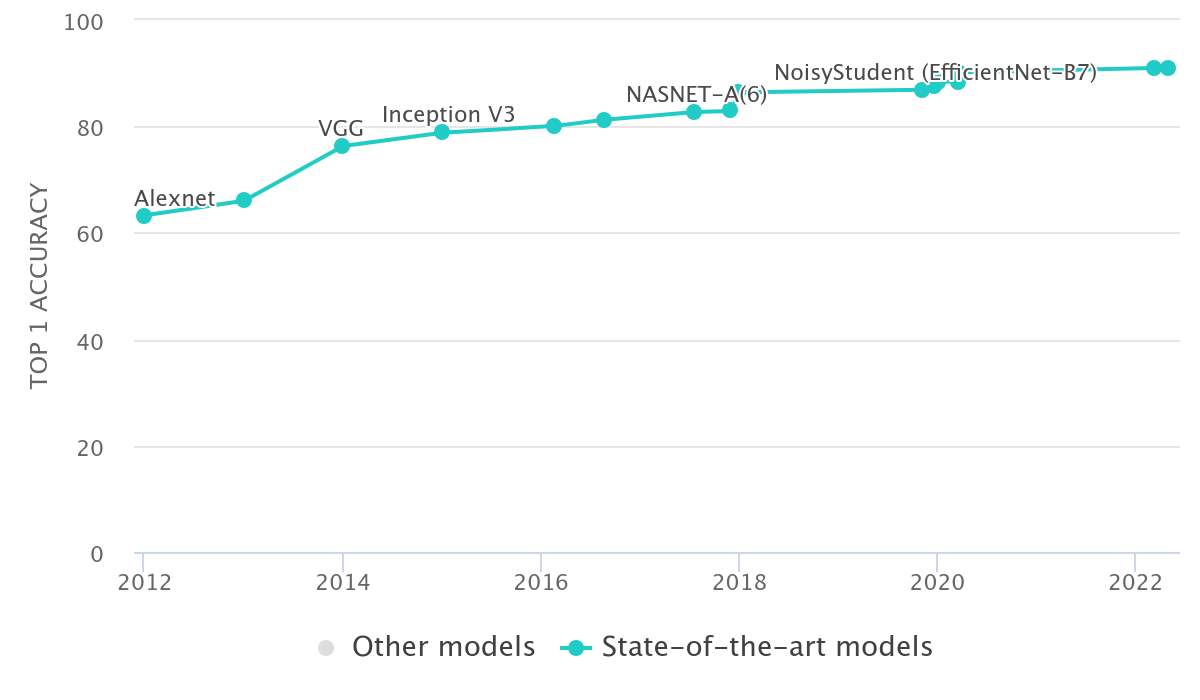
ImageNet Challenge

Different than more neurons

  • Scaling up neurons often doesn’t help in shallow nets
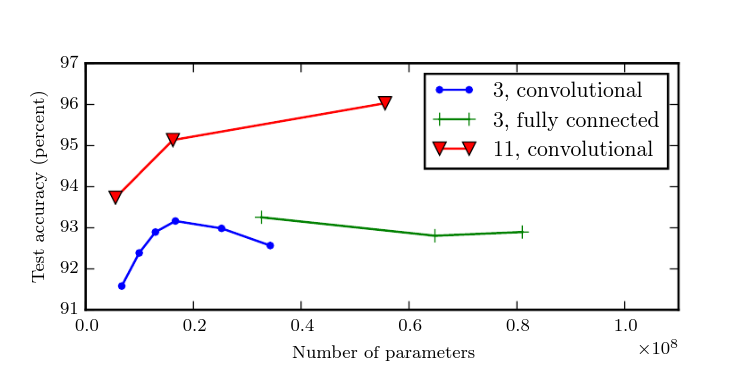
Goodfellow

Why is it better?

  • We don’t know for certain, but there are theories
    1. Hierarchical Features
    2. Increased Folds
    3. Easier to train (had problems)

Hierarchical Features

  • Deep networks enable hiearachical classification
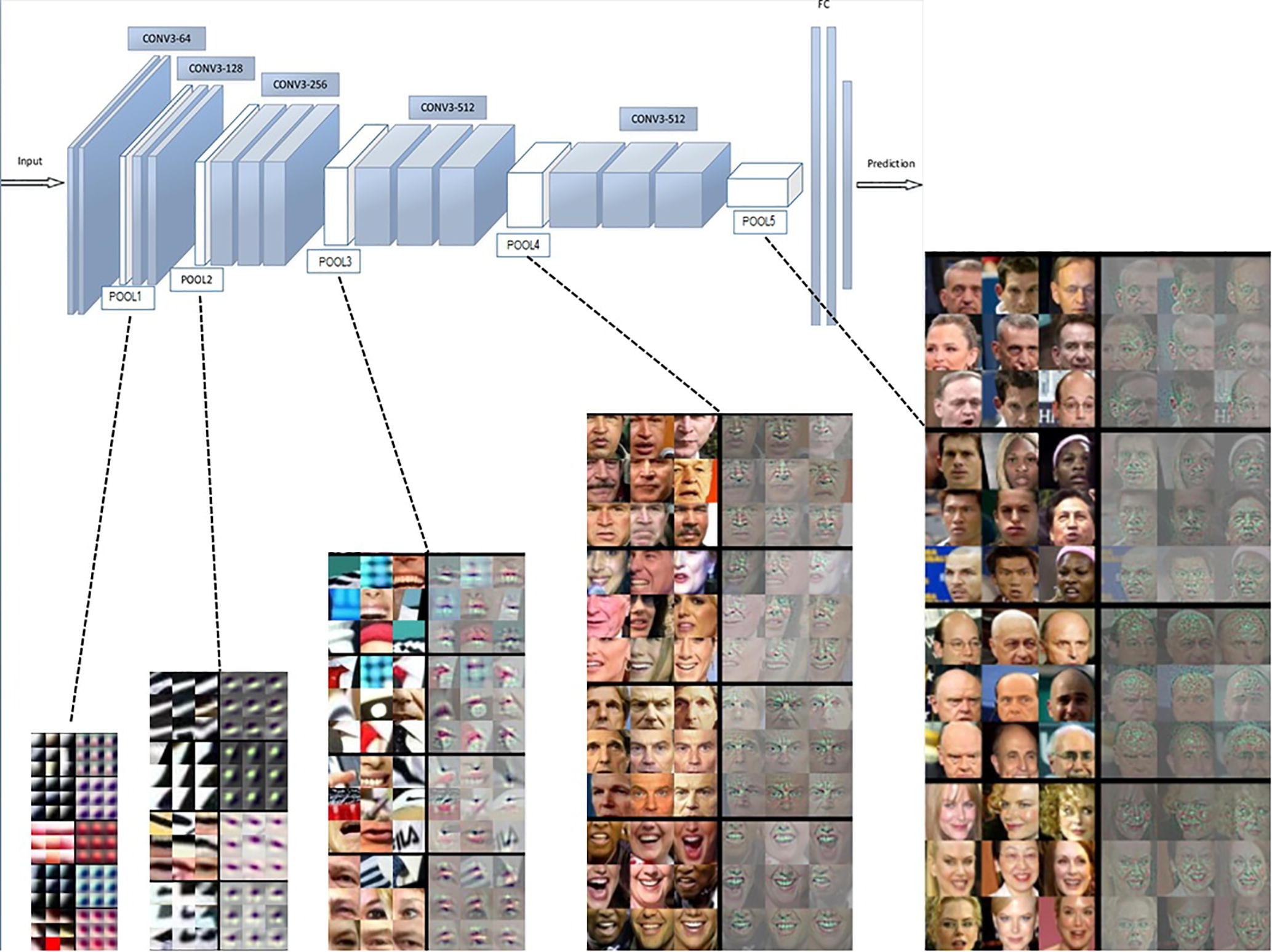
Wand and Deng 2018

Efficiency of Representing Certain Functions

  • There are example of mathematical functions where shallow networks require “exponentially more” neurons compared with deeper networks
    • Computing the “parity” of a set of \(n\) bits
  • But generally, we want to think about how well a given architecture can approximate a function with a certain shape

Folding

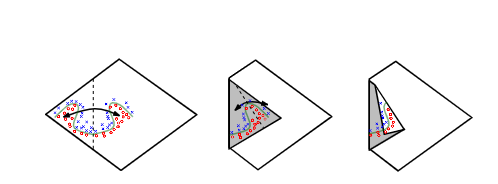
  • Can think about the graph of a neural network
  • Each neuron adds a “fold” to graph

Montufar et al 2014

Folding

  • \(k\) layers, width \(n\)
  • Wide/Shallow net:
    • Regions per parameter is \(R\sim k^c n^c\)
  • Deep/Narrow net:
    • Regions per parameter is \(R\sim (n/c)^{k-1}\)
  • Exponentially more regions!

Easier to Train Deep Networks?

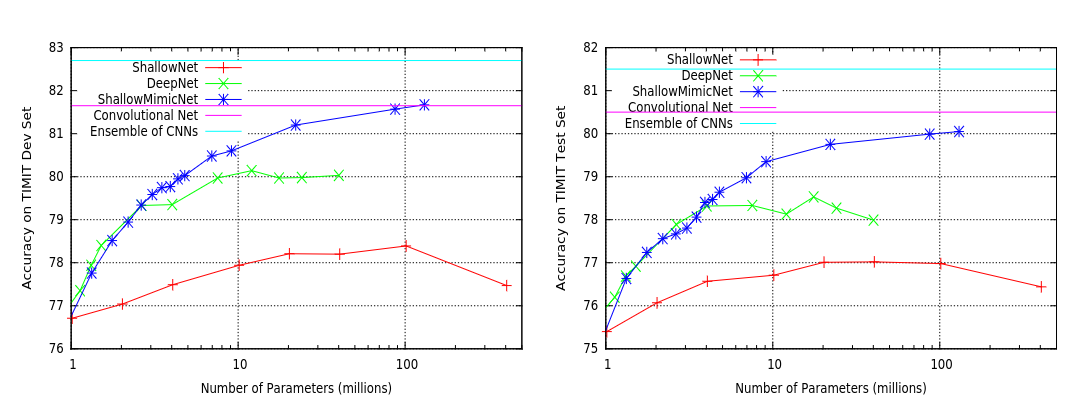
  • Turns out you can train a shallow network to “mimic” a deep one: Ba and Caruana 2014

Easier to train deep networks

  • Suggests something stops shallow nets from converging well Ba and Caruana 2014

Vashing Gradients

  • Landscape of deep network varies by layer:
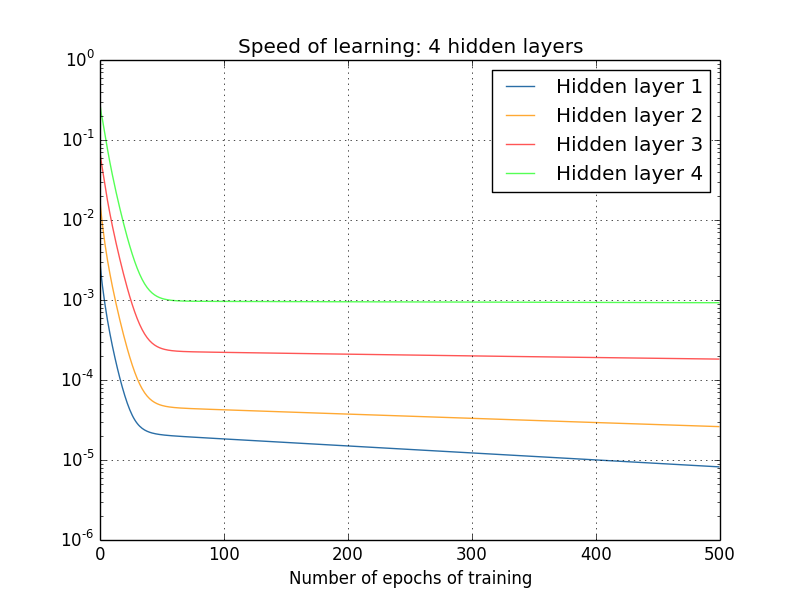
Nielson

Why Vanishing Gradients?

  • Consider a deep network with one neuron per layer:
  • If activation function is \(\phi\) can write it as: \[ f(x_1) = \phi \circ (w_n x + b_n) \circ \phi \circ (w_{n-1}x + b_{n-1}) \circ \\ \phi\circ \cdots\circ \phi \circ(w_1 x +b_1) (x_1) \]

Taking Derivatives

  • The close to the output, the fewer “terms” in the derivative:
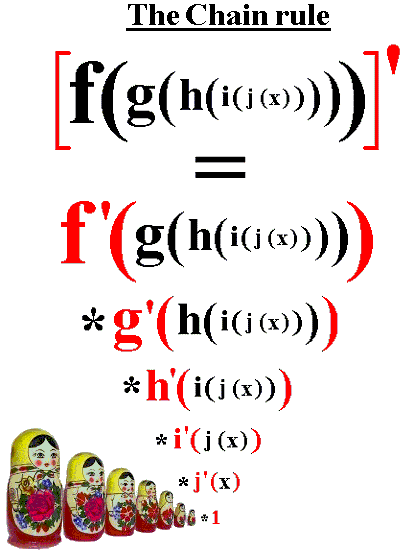
wikpedia

Taking Derivatives

\[ \frac{\partial f}{\partial w_n} = \phi'(w_nx_n+b_n)x_n \\ \frac{\partial f}{\partial w_{n-1}} = \phi'(w_nx_n+b_n)w_n\phi'(w_{n-1}x_{n-1}+b_{n-1})x_{n-1} \\ \frac{\partial f}{\partial w_1} = \frac{x_1}{w_1}\prod_{i=1}^n\phi'(w_ix_i+b_i)w_i \]

  • We are multiplying by \(\phi'\) and \(w_i\) once for each layer

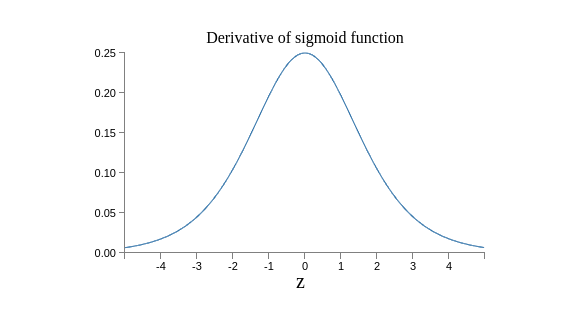
Sigmoid Saturation

  • Typical Activation functions are flat outside a narrow range
Nielson

  • Repeated multiplication by this derivative causes gradients to shrink closer to the inputs

Exploding Gradients?

  • Gradients depend on the weights too:
    • Multiplication by \(w_i\phi'(x_i)\)
    • If \(w_i\) are initialized big enough, gradients will explode towards inner layer
  • This is rare because large weights typically saturate the \(\phi\) function

Condition Number of Hessian?

  • When the Curvature of the objective varies, gradient based methods struggle
  • It is possible/likely that all the tricks for deep learning are really about the Hessian condition number
  • Hessian is sort of uncomputable for deep nets

Condition Number of Hessian?

Solutions: Initialization

  • Gradient across layers depends on the weights
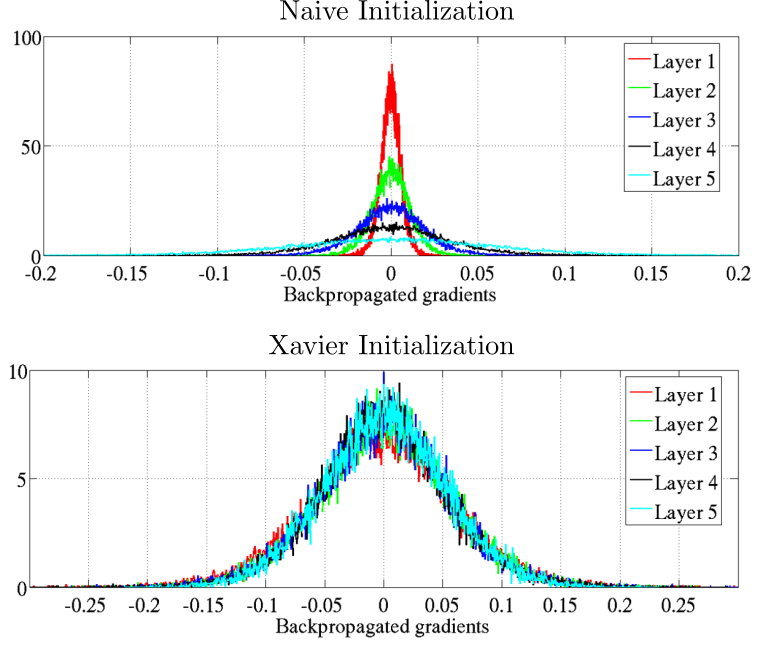
  • By carefully choosing initial weights, gradients can initially be uniform across all layers
  • Xavier Glorot: \[ \mathrm{Var}(w_i) = \frac{2}{n_{i(i-1)}+n_{i(i+1)}} \]
  • Have to turn the math cranks to see why

Xavier Initialization

  • Has a large effect on both activations and gradients
Kaiming Normalization

  • When training deep neural networks with ReLU neurons \[ \mathrm{Var}(w_i) = \frac{2}{n_{i(i-1)}} \]

Implementing Initializations

  • In pytorch, default varies by layer type
  • You have control:
nn.init.xavier_normal_(layer.weight)
nn.init.xavier_uniform_(layer.weight)
nn.init.kaiming_normal_(layer.weight, nonlinearity='relu') 
nn.init.kaiming_uniform_(layer.weight,nonlinearity='relu')
  • Normal versus Uniform?
    • Unclear Theory, maybe normal for deeper nets

Solution: Activations

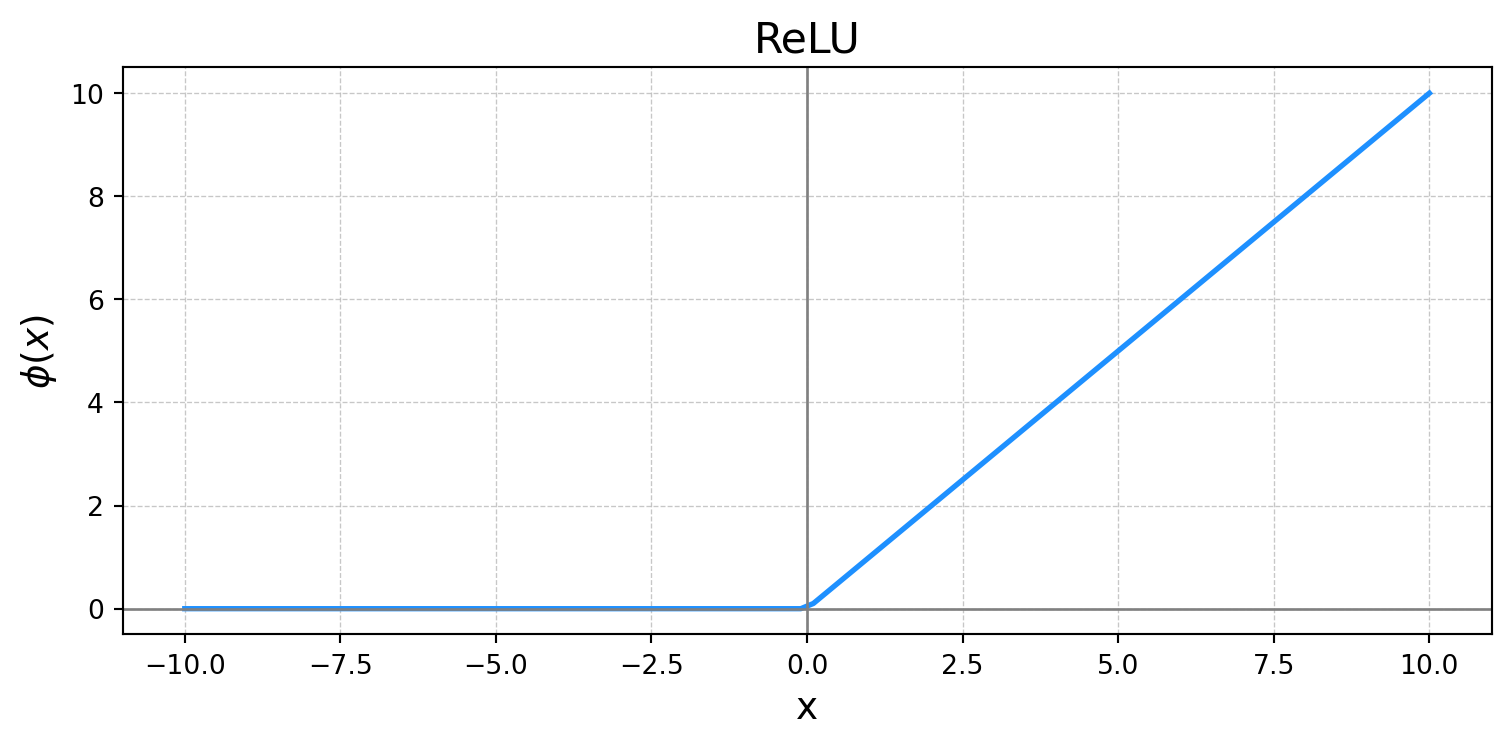
  • Rectified Linear Unit (ReLU)

\[ \phi(x) = \cases{0& \text{if} \quad x\leq 0 \\ x& \text{if} \quad x>0} \]
Why ReLU?

  • Gradient either 0 (meaning path is dead) or 1
  • Prevents Saturation
  • Induces Sparsity
  • Always piecewise linear function, no matter the depth
  • Empirical observation

What we didn’t talk about…

  • Convolutional Neural Networks, drop-out, early stopping, unsupervised learning, etc
  • Residual Nets (ResNets)
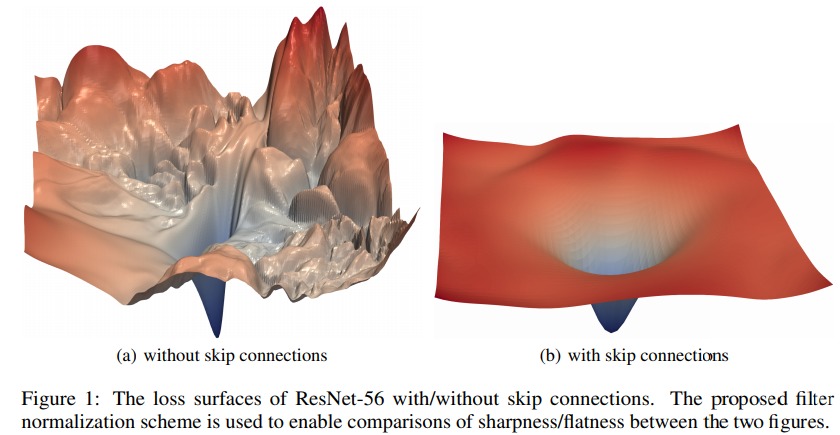
    • Skip connections convexify!

Thanks!