DATA 622 Meetup 11: Interpretable ML

George I. Hagstrom

2026-04-13

Data Science Seminar Tomorrow!!!
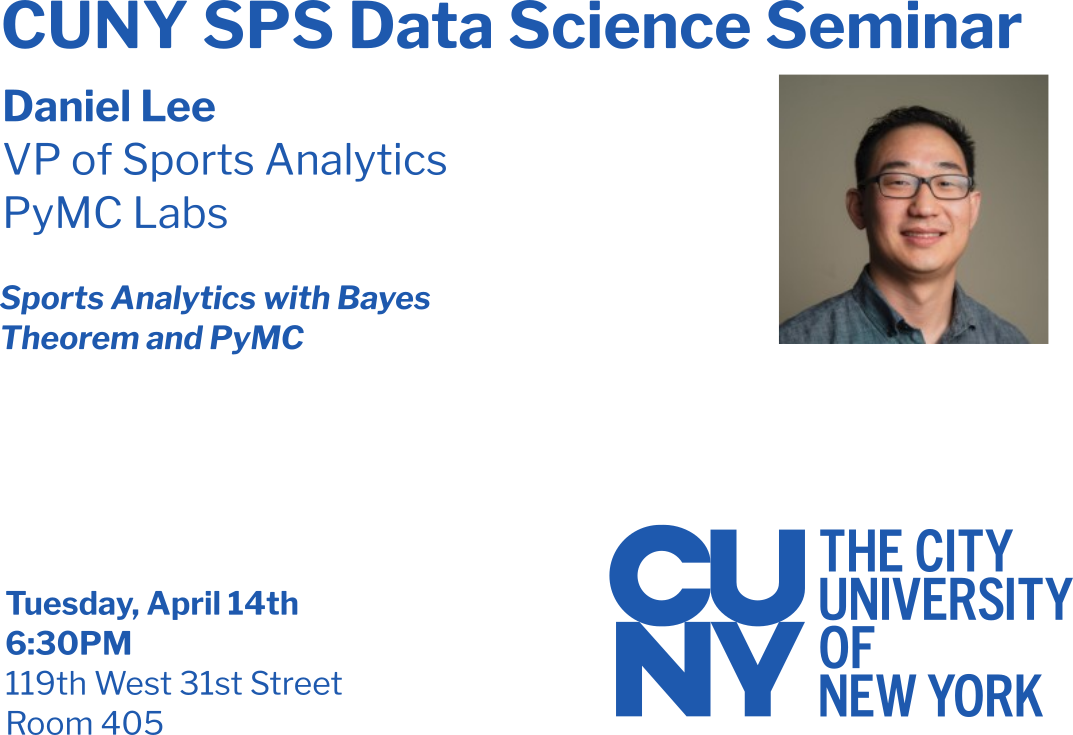
Data Science Seminar Tomorrow!!!

  • Daniel Lee
    • VP Of Sports Analytics at PyMC Labs
    • Sports Analytics
    • Election Forecasting
    • Probabilistic Programming

Data Science Seminar Tomorrow!!!

HW 4 Comments

  1. Cross Validation with Linear Models
# I saw this or something equivalent in most homeworks:

cv = KFold(n_splits=5, 
        shuffle=True, 
        random_state=32131)

ridge_cv = RidgeCV(alphas=alphas, 
                fit_intercept=True, 
                cv=cv,
                scoring="neg_root_mean_squared_error")

HW 4 Comments

  1. Cross Validation with Linear Models
# I saw this or something equivalent in most homeworks:

cv = KFold(n_splits=5, 
        shuffle=True, 
        random_state=32131)

ridge_cv = RidgeCV(alphas=alphas, 
                fit_intercept=True, 
                cv=cv,
                scoring="neg_root_mean_squared_error")
  • Not wrong, but you can do ‘loo-cv’ here for free

HW 4 Comments

  1. Cross Validation with Linear Models
# Best way to do this:

ridge_cv = RidgeCV(alphas=alphas, 
                fit_intercept=True,
                scoring="neg_root_mean_squared_error")

HW 4 Comments

  1. Different \(\alpha\) for weighted and unweighted regression
# The best alpha from the unweighted model

best_alpha = ridge_cv.alpha_

ridge_weights = Ridge(alpha=best_alpha,
                fit_intercept=True,
                scoring="neg_root_mean_squared_error"
)

HW 4 Comments

  1. Different \(\alpha\) for weighted and unweighted regression
# Instead just do RidgeCV

ridge_weights = RidgeCV(alphas=alphas,
                fit_intercept=True,
                scoring="neg_root_mean_squared_error"
)

HW 4 Comments

  1. Interpreting Graphs
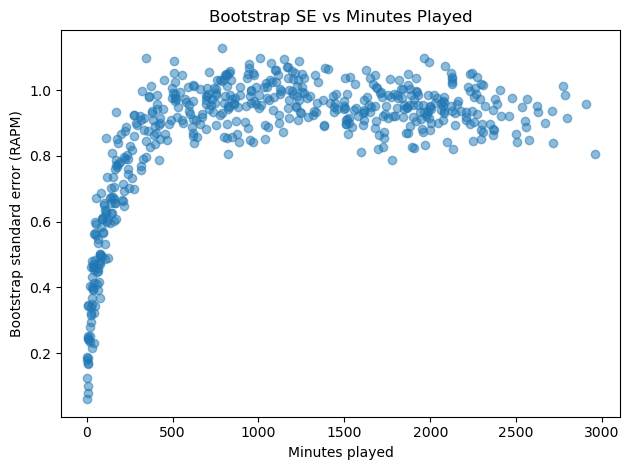
  • Bootstrap Uncertainty vs Minutes Played
HW 4

  1. Interpreting Graphs
  • Bootstrap Uncertainty vs Minutes Played

Is uncertainty is highest for low minute players?

Week Summary

Black Boxes Gone Wrong

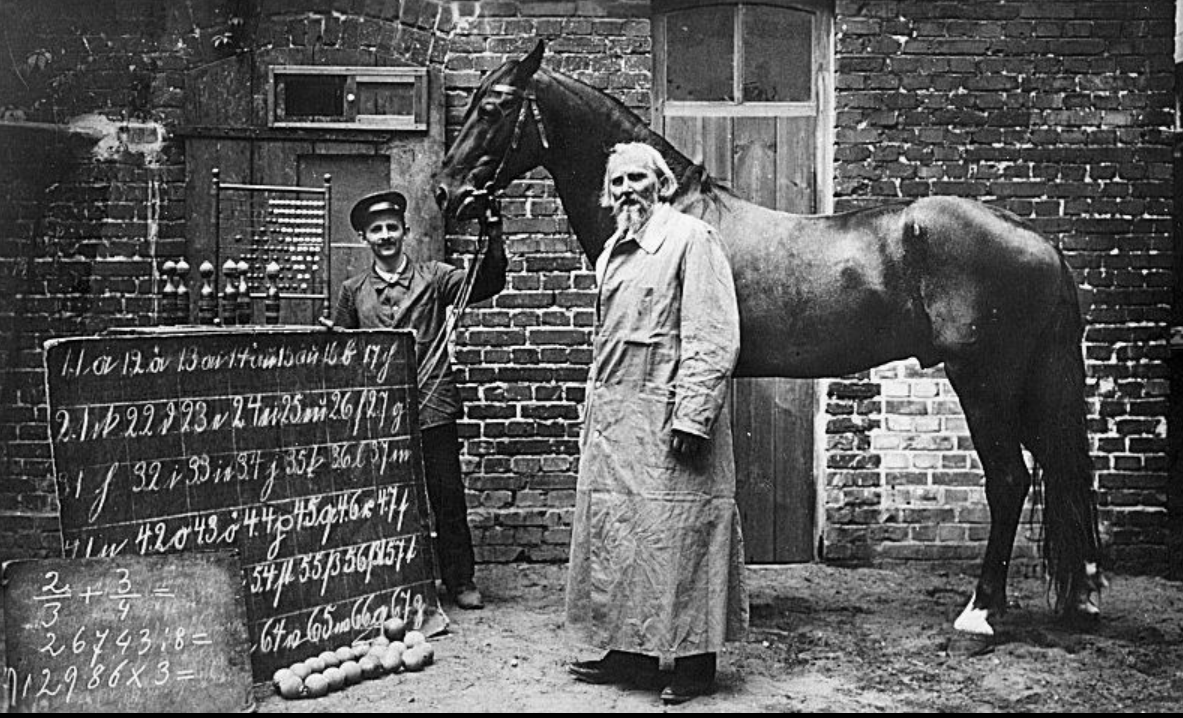
  1. Clever Hans: Horse that could add

wikipedia

Black Boxes Gone Wrong

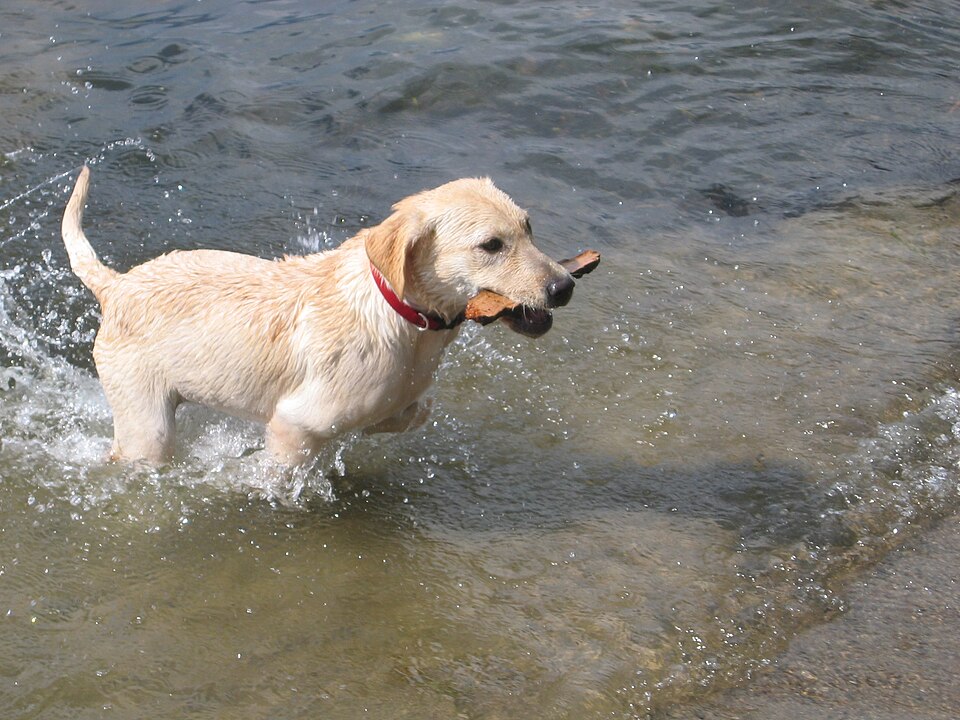
  1. Dog vs. Wolf

wikipedia

wikipedia
  • Image classifier trained on images of dogs and wolves used the presence of snow as primary means of determining class

Black Boxes Gone Wrong

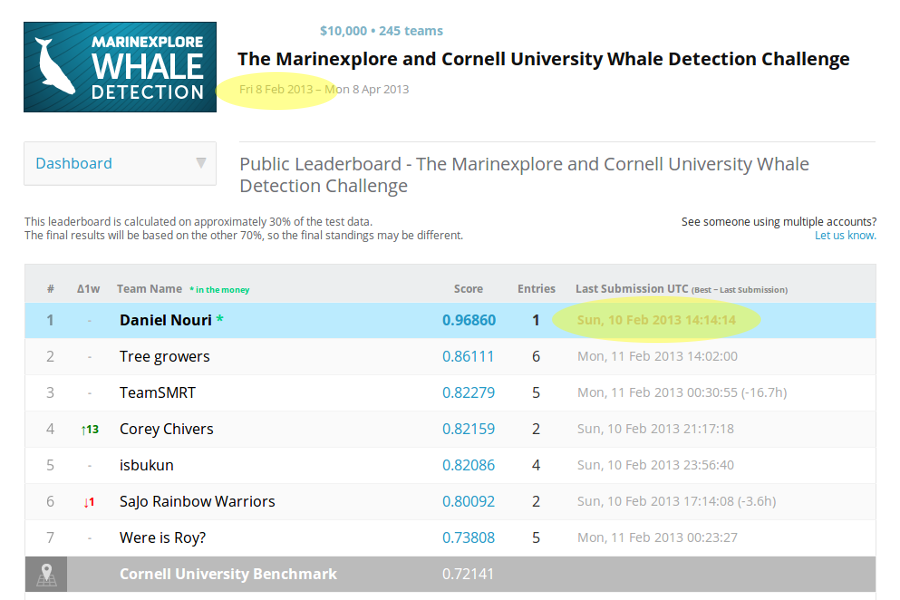
  1. Identifying Whales in Hydrophone Recordings
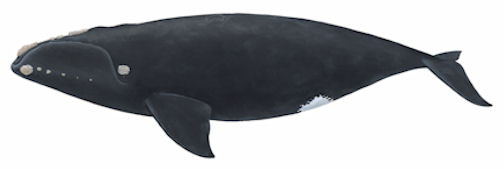
  • Cornell University held a contest to identify Right Whales

Black Boxes Gone Wrong

  1. Identifying Whales in Hydrophone Recordings
  • Cornell University held a contest to identify Right Whales
  • Winner had astonishingly high accuracy
Black Boxes Gone Wrong

  1. Identifying Whales in Hydrophone Recordings
  • Cornell University held a contest to identify Right Whales
  • Winner had astonishingly high accuracy
  • Algorithm worked by taking advantage of recording metadata

Black Boxes Gone Wrong

  1. Identifying Whales in Hydrophone Recordings
  • Recordings without whales always had a length rounded to 10s of milliseconds
  • Enough to get AUC of 0.945
  • After removing data leakage, AUC dropped from 0.99+ to 0.59

When Interpretability?

  • Sometimes we do not care about the reason for a prediction:
    • Low Stakes
    • Very highly vetted (OCR, modern image recognition, etc)

When Interpretability?

  • Sometimes the reasons are critical
    • Detecting pedestrians or cyclists in self-driving cars

When Interpretability?

  • Sometimes the reasons are critical
  • Extending or denying credit or loans
  • Making a decision: Will customer churn because we talked to them too much or too little?
  • High $ value decisions with stakeholders

What is Interpretability?

  • Biran and Cotton 2017:

Interpretability is the degree to which a human can understand the cause of a decision.

Interpretability Features

  • Interpretability is Contrastive

  • You want to explain a certain prediction or decision was made instead of an alternative

  • How would my odds of approval change if I had less credit card debt?

Interpretability Features

  • Interpretability is Selective

  • You want to focus on the most important few features, not every single feature

Interpretability Features

  • Interpretability is Social

  • What counts as a good explanation depends on who you are talking to:

    • Data Scientist Colleague
    • Regulator
    • Non-technical manager
    • Customer

Interpretability Methods

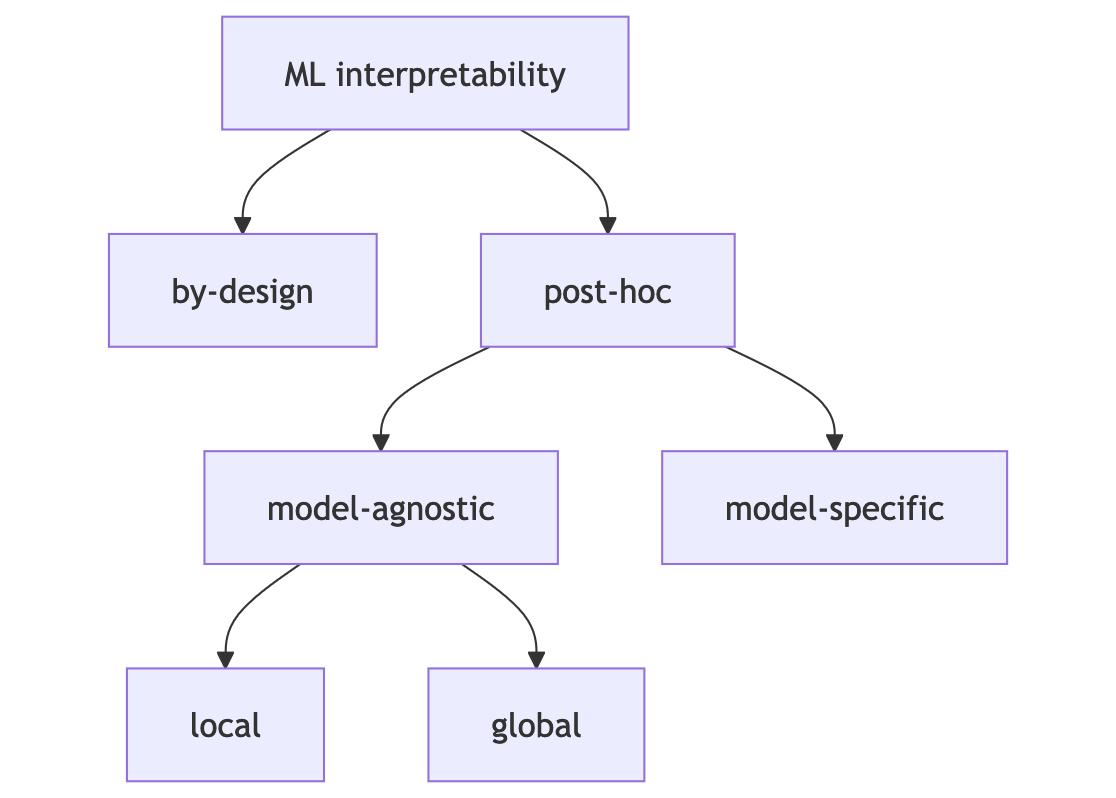
ML Interpretability

Interpretability Methods
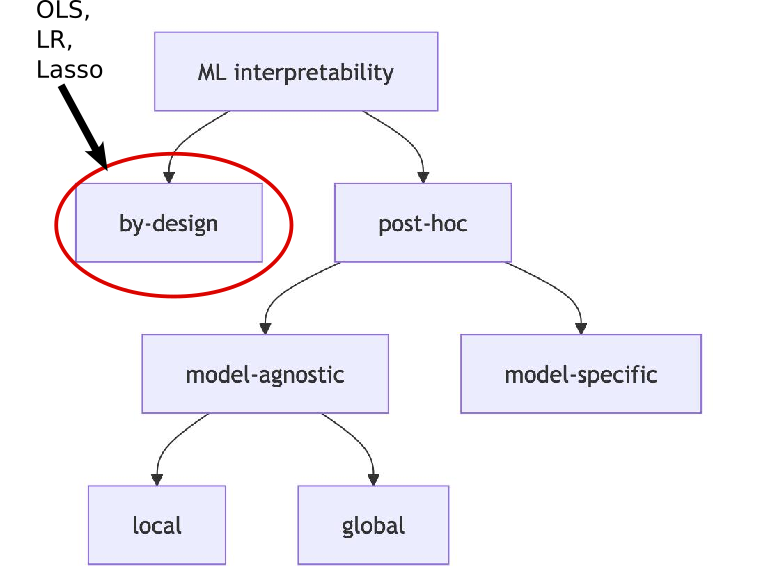
ML Interpretability

Interpretability Methods
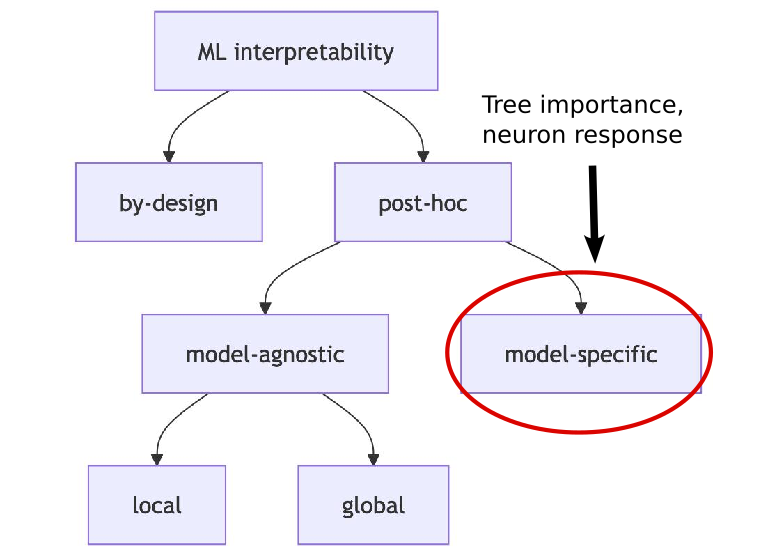
ML Interpretability

Interpretability Methods
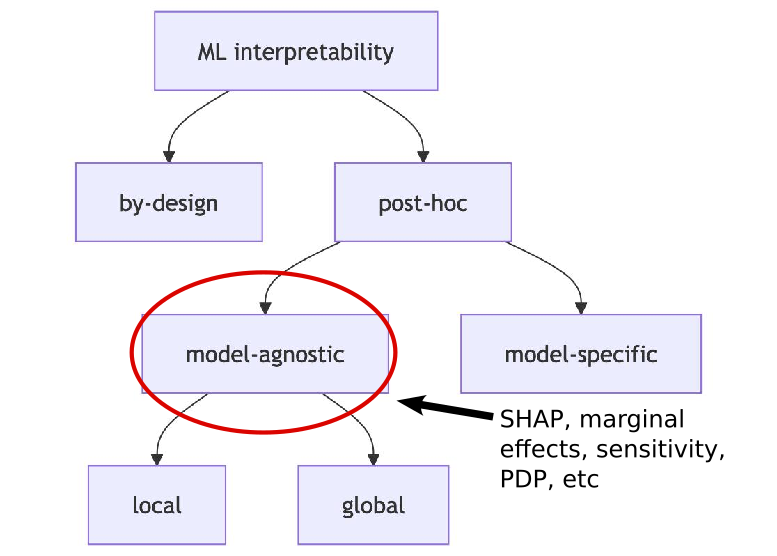
ML Interpretability

Post-Hoc Model-Agnostic Ingredients

Everything uses SIPA:

  1. Sample from the data
  2. Intervene on some variables
  3. Predict the outcome
  4. Aggregate the results

Bikeshare Example

  • Washington DC Hourly Bike Share Data
  • Target is ‘cnt’ variable
  • Features are weather, type of day, time of day, etc
season yr mnth hr holiday weekday workingday weathersit temp atemp hum windspeed cnt cnt_2d_bfr days_since_2011
47 1 0 1 0 0 1 1 1 0.22 0.1970 0.44 0.3582 5 985.0 2.0
48 1 0 1 1 0 1 1 1 0.20 0.1667 0.44 0.4179 2 985.0 2.0
49 1 0 1 4 0 1 1 1 0.16 0.1364 0.47 0.3881 1 985.0 2.0
50 1 0 1 5 0 1 1 1 0.16 0.1364 0.47 0.2836 3 985.0 2.0
51 1 0 1 6 0 1 1 1 0.14 0.1061 0.50 0.3881 30 985.0 2.0

Bikeshare Model

  • How does our Random Forest Perform?
RMSE: 81.1
\$R^2\$: 0.864
  • Not awful, but this is very lazy

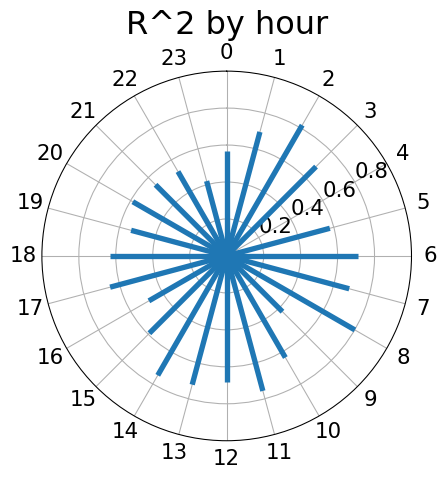
Bikeshare Model by Hour

  • Let’s look at the predictive accuracy by hour
Bikeshare Model by Hour

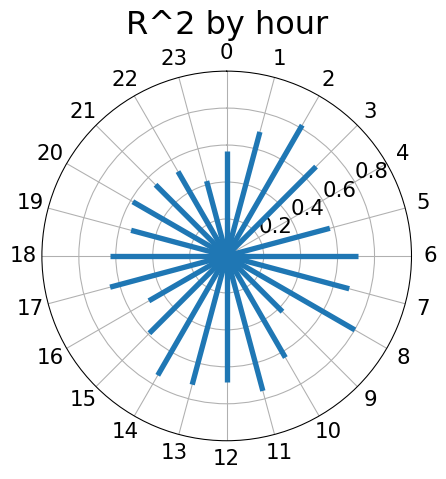
  • Let’s look at the predictive accuracy by hour
Tree Importance
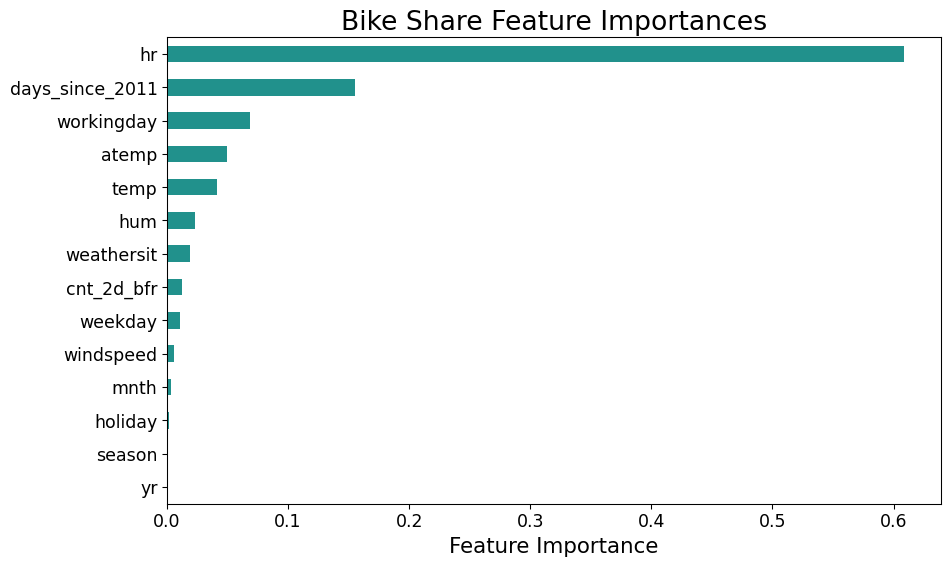
Flaws of Tree Importance

  • Just tells us magnitude
  • No direction
  • No interactions
  • No local dependence

Local Versus Global

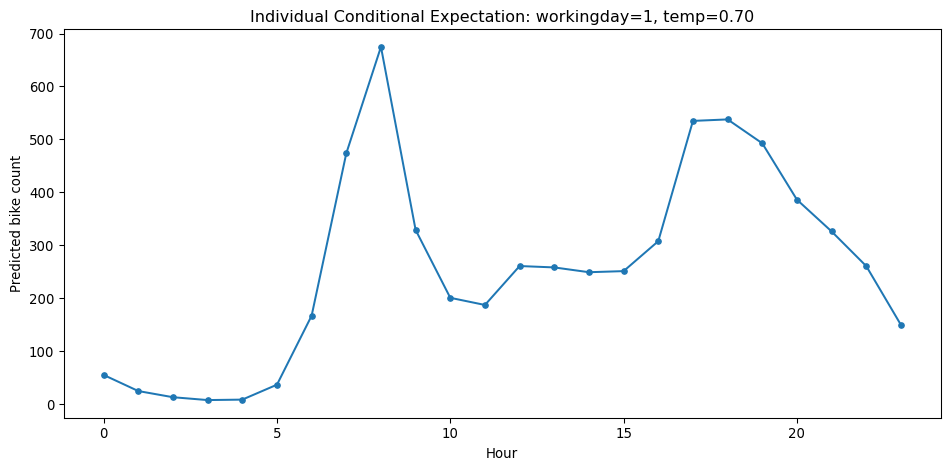
  • Local looks at the impact of features at a specific data point.
  • Ceteris Parabis plots (or “Slope” or “Marginal Effect”):
Local Versus Global

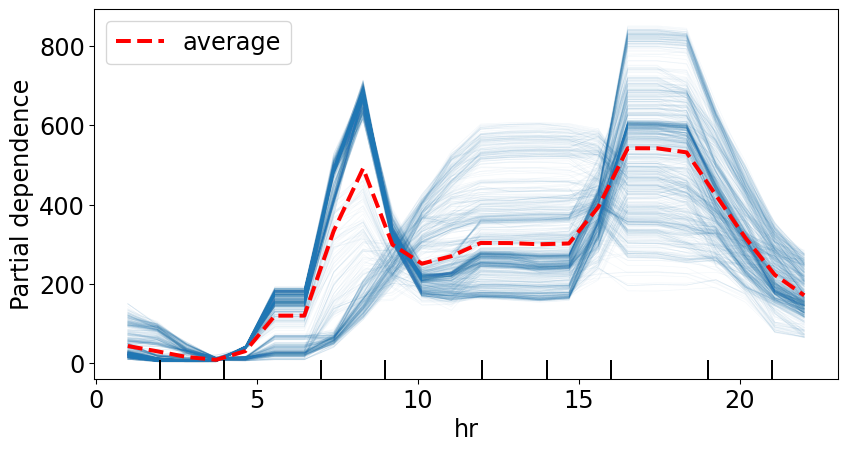
  • Global looks at the impact of the feature averaged over many instances
  • Partial Dependence Plot averages all of the Conditional Expectation Curves
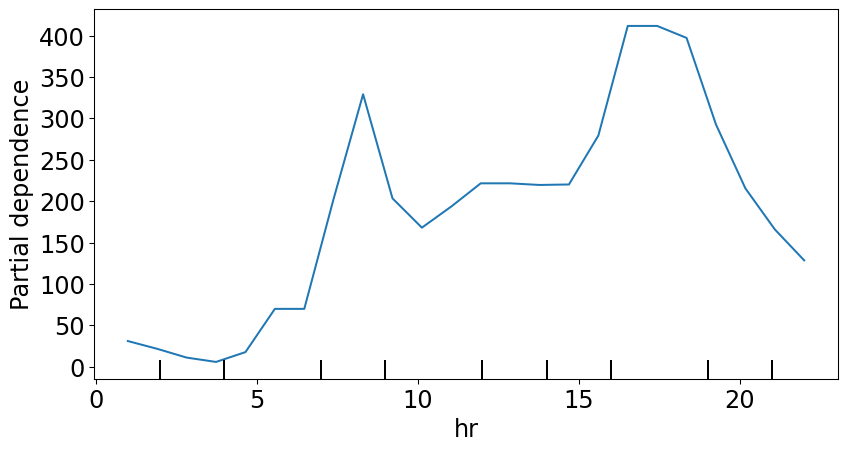
PartialDependenceDisplay.from_estimator(rf, 
  X_test, 
  features=["hr"], 
  grid_resolution=24)

Local Versus Global

  • Global looks at the impact of the feature averaged over many instances
  • Partial Dependence Plot averages all of the Conditional Expectation Curves
Local Versus Global

  • Global looks at the impact of the feature averaged over many instances
  • Partial Dependence Plot averages all of the Conditional Expectation Curves

SHAP

  • SHAP is a newish tool that is complex but has some very nice additional features:
    • Divides attribution additively between the features for each prediction/decision
    • Can easily make comparisons (Why did you approve person A instead of Person B)
    • Some very good theoretical properties!

Shapley Values

  • The idea of Shapley is based on averaging lots of conditional expectations:
  • Target feature is \(x_t\)
  • Conditional features are \(\mathbf{x}_c\)
  • Look at: \[ E(\hat{f}| x_t, x_c) - E(\hat{f}| x_c) \]
  • Suppose we know the features \(\mathbf{x}_c\). How much does knowing \(x_t\) change the expeced prediction?

Shapley Values

  • The idea of Shapley is based on averaging lots of conditional expectations:
  • Target feature is \(x_t\)
  • Conditional features are \(\mathbf{x}_c\)
  • Look at: \[ \Delta_t(\mathbf{x}_c) = E(\hat{f}| x_t, x_c) - E(\hat{f}| x_c) \]
  • Suppose we know the features \(\mathbf{x}_c\). How much does knowing \(x_t\) change the expected prediction?

Shapley Values

  • To get the Shapley value, we average the \(\Delta_t(\mathbf{x}_c)\) over all possible combinations of features \(c\): \[ \phi_t(\mathbf{x}) = \frac{1}{N_c} \sum_{c} \Delta_t(\mathbf{x}_c) \]
  • Combinations of features are called “coalitions”
  • For each data point and each feature get a “contribution”

Shapley Example

  • Consider an apartment pricing model
  • Variables are:
    • Apartment size
    • floor level
    • Can you have a cat as a pet?
  • Predicted sales price

Shapley Example

  • Our data point is 50\(m^2\), 1st floor, bans cats, near parks
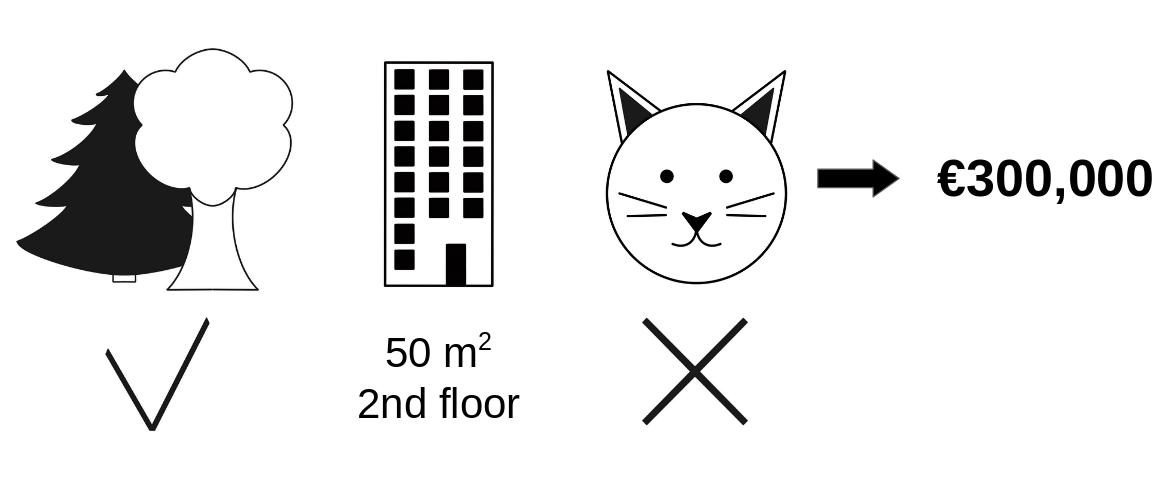
molnar 17

Shapley Example

  • Consider full coalition
  • Just look at difference between ban cats and not
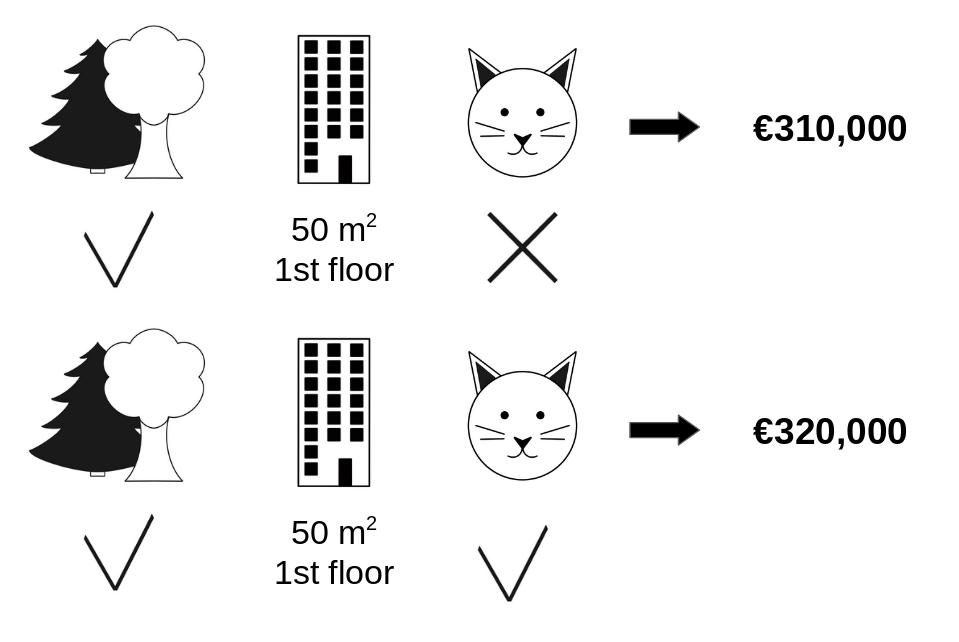
molnar 17

Shapley Example

  • What if cat ban was continuous, like floor area instead?
  • Then you average over model predicitions of all floor areas….
    • Technically, you do this by resampling from your training data
    • Same goes for when area is in your coalition

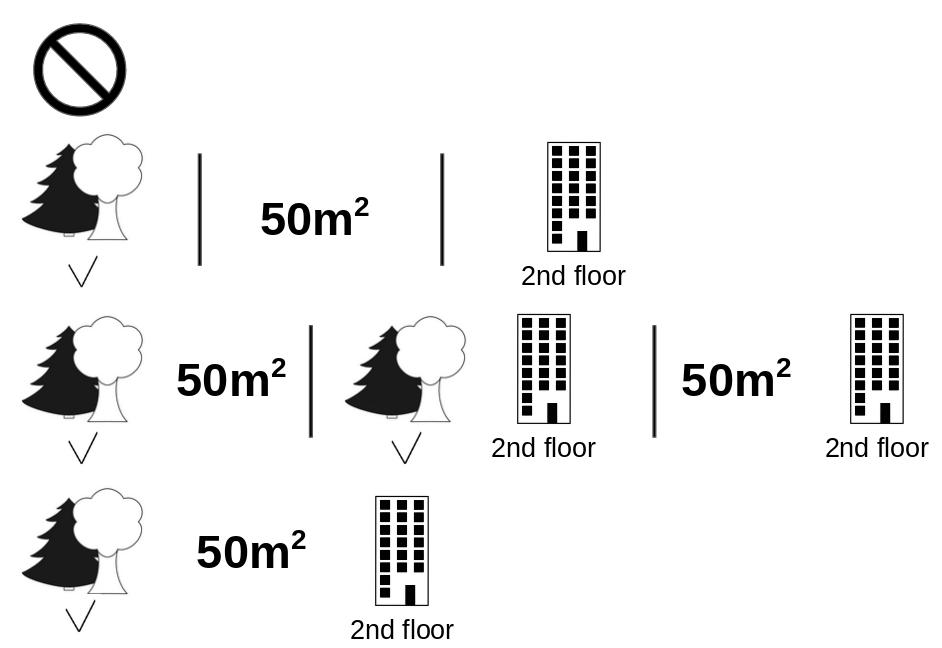
Shapley Coalitions

  • Here are all the coalitions behind a single shapley value
SHAP

  • Overall this is called Shapley Additive ExPlanations or SHAP
  • Big challenge: Too many possible coalitions
  • Need Approximate algorithms:
    • Monte Carlo
    • KernelShap
    • TreeShap
    • Others…..

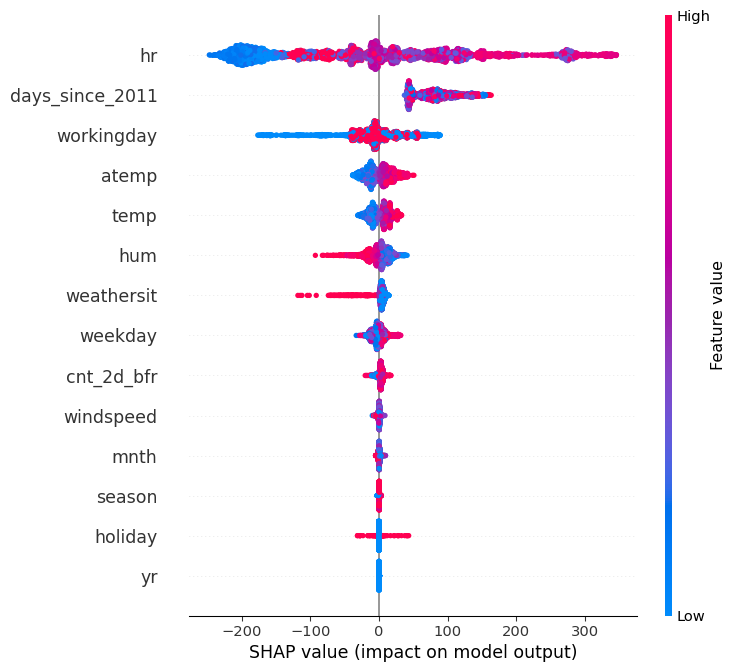
SHAP Importance

# Code for a feature importance plot

shap.summary_plot(shap_values, X_test)

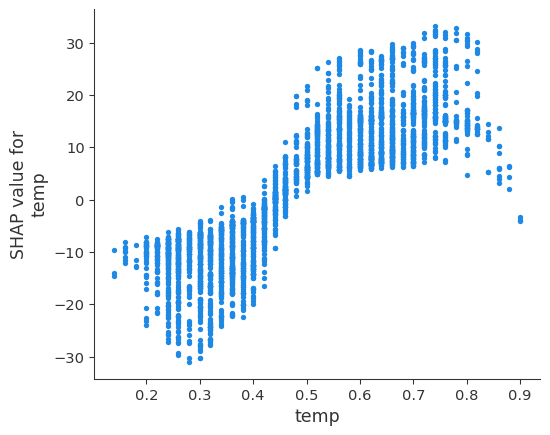
SHAP Dependence Plot

# Code for a shap dependence plot

shap.dependence_plot("temp", shap_values, X_test,
    interaction_index=None)

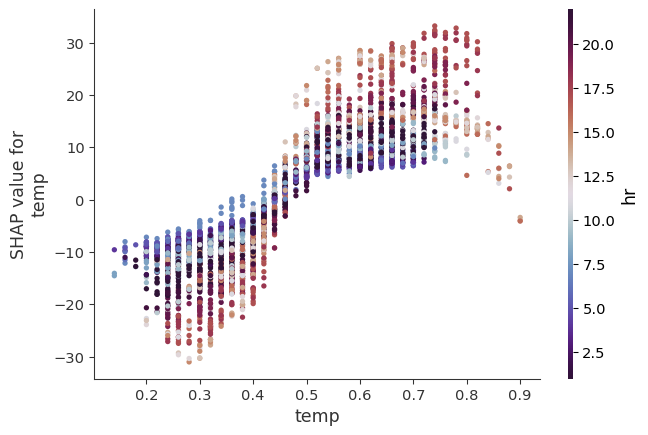
Interactions by default

# Code for a shap dependence plot with interactions picked by size


shap.dependence_plot("temp", shap_values, X_test,
    cmap=plt.cm.twilight_shifted)

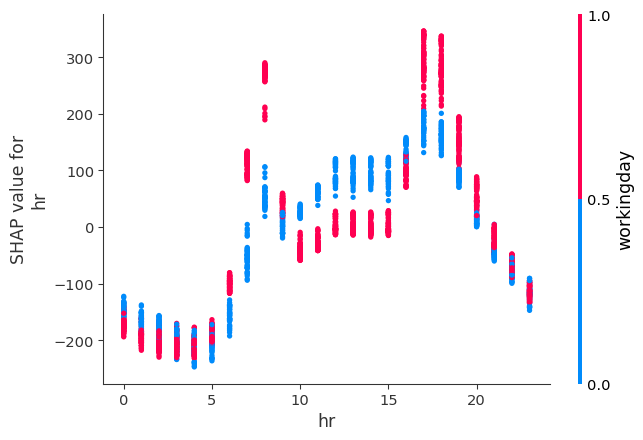
SHAP Interactions Plot

# Code for a shap dependence plot with interaction chosen

shap.dependence_plot("hr", shap_values, X_test, 
    interaction_index="workingday")

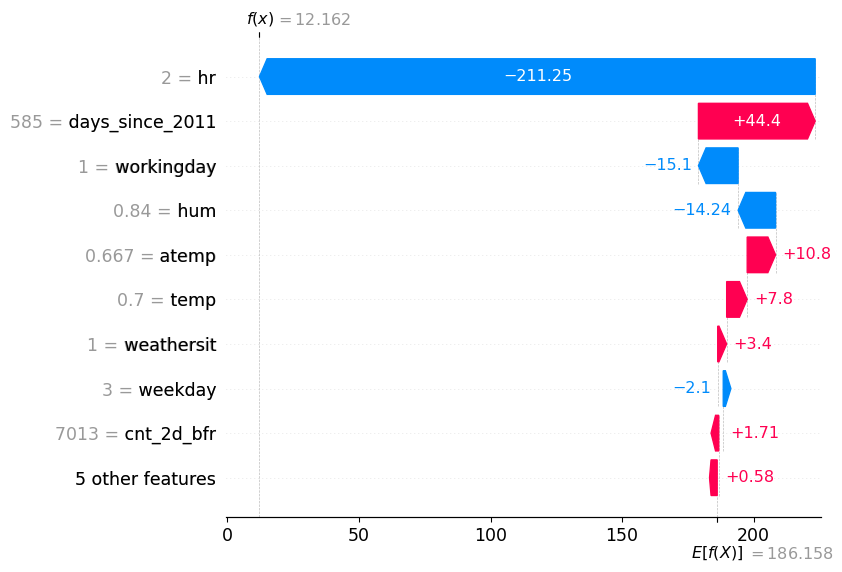
Shap Waterfall Plot

# The waterfall plot shows how a prediction was made

shap.waterfall_plot(shap.Explanation(
    values=shap_values[0], base_values=explainer.expected_value, 
    data=X_test.iloc[0]
))

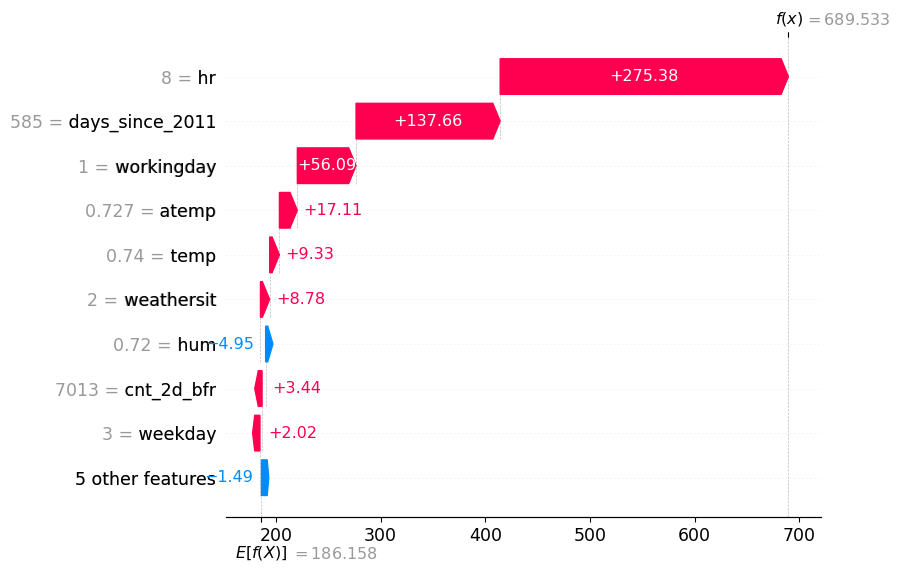
Shap Waterfall Plot v2

# 6 hours later waterfall plot

shap.waterfall_plot(shap.Explanation(
    values=shap_values[6], base_values=explainer.expected_value, 
    data=X_test.iloc[6]
))

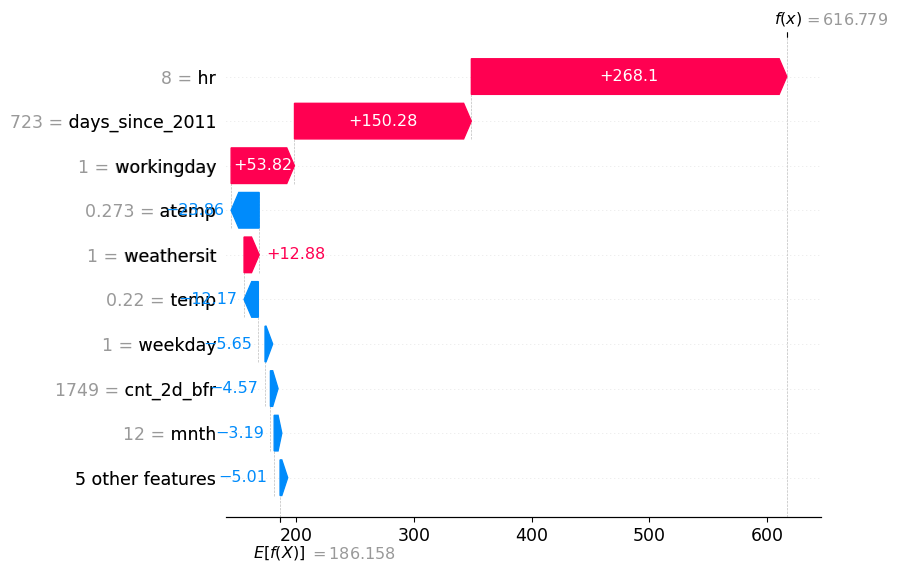
Shap Plot for the worst prediction

2012-12-27
Thanks!