DATA 622 Meetup 13: Neural Networks

George I. Hagstrom

2026-04-27

Week Summary

  • Focus this week is convolutionary neural networks (CNNs)
  • Secondary focus:
    • Heuristics for training Neural Networks
    • Deep Neural Network Issues
  • Lab 7 Due this week

Optimization Basics

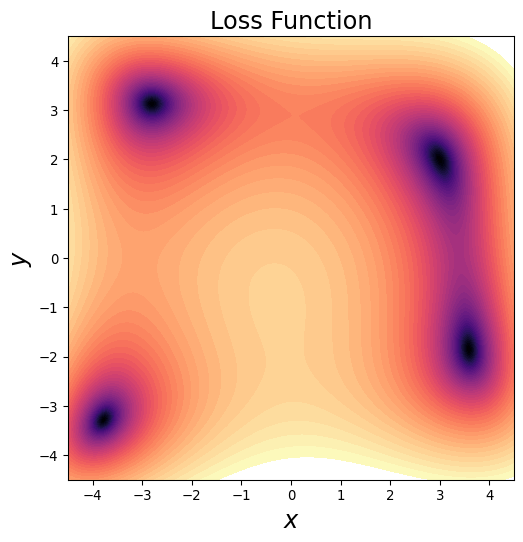
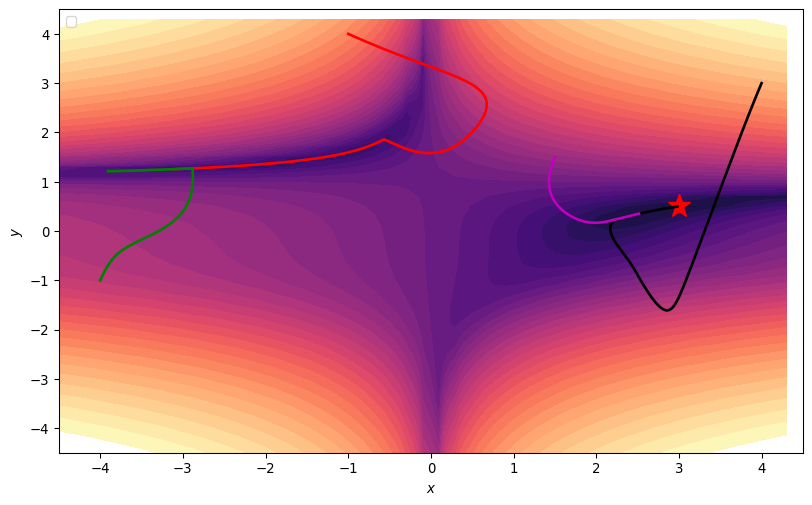
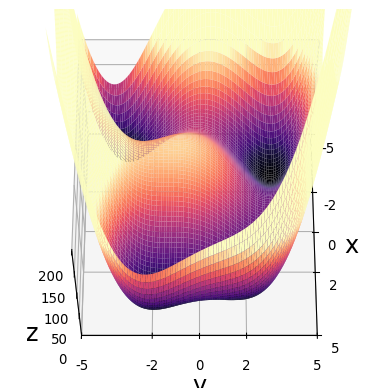
  • Simplified loss landscape:
  • Imagine more dimensions

Gradient Descent

  • Start at \(\mathbf{x}_0\)
  • Find gradient \(\nabla \mathrm{loss}(\mathbf{x})\)
  • \(\mathbf{x}_n = \mathbf{x}_{n-1} - \kappa \nabla\mathrm{loss}(\mathbf{x}_{n-1})\)
  • \(\kappa\) is learning rate

What Learning Rate to Pick?
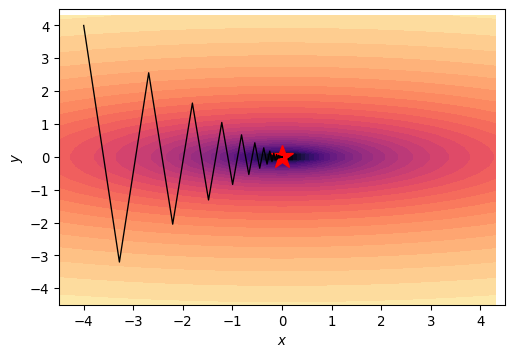
  • High learning rate trains faster
  • Too high and don’t converge at all
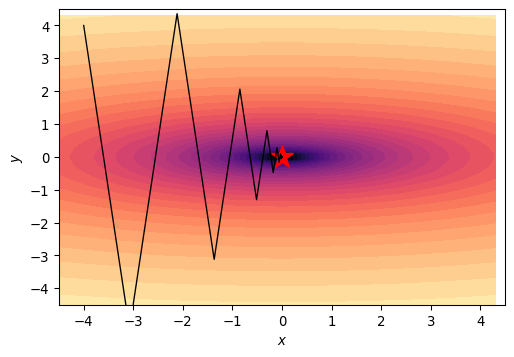
  • Limit is set by algorithm and ellipticity of well

What Learning Rate to Pick?

  • Steepness discrepancy limits learning rate
  • Most of the step is in wrong direction

Momentum

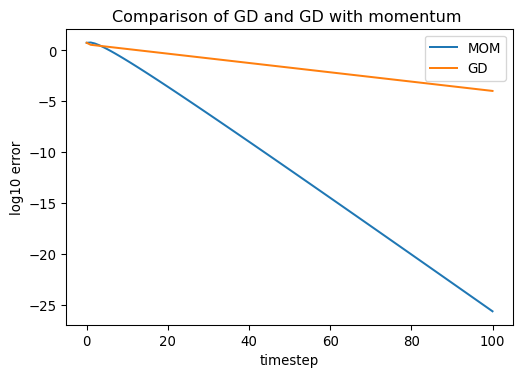
  • Advanced algos use momentum, gives “memory” of past gradient
  • Reduces effect of valley oscillation

Hyperparameter Problems

  • We don’t know the shape of the loss landscape to pick \(\kappa\)
  • We handle this several ways:
    • Experimentation
    • Heuristics
    • Adaptive Methods

Stochastic Gradient Descent

  • Common for optimization algorithms to “get stuck”
Stochastic Gradient Descent

  • In low-D local minima are problematic

Stochastic Gradient Descent

  • Trajectories get Stuck

Stochastic Gradient Descent
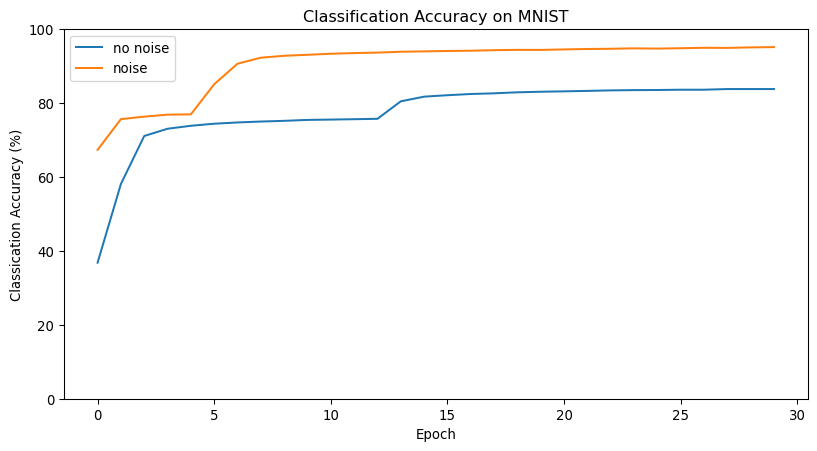
  • The barriers in high dimensions likely more complex
  • Stochastic Gradient Descent modifies gradient descent style methods
    • Compute the gradient of loss using only part of the data
    • Called a “mini-batch”
    • Smaller the mini-batch, the more the noise

Stochastic Gradient Descent

Stochastic Gradient Descent

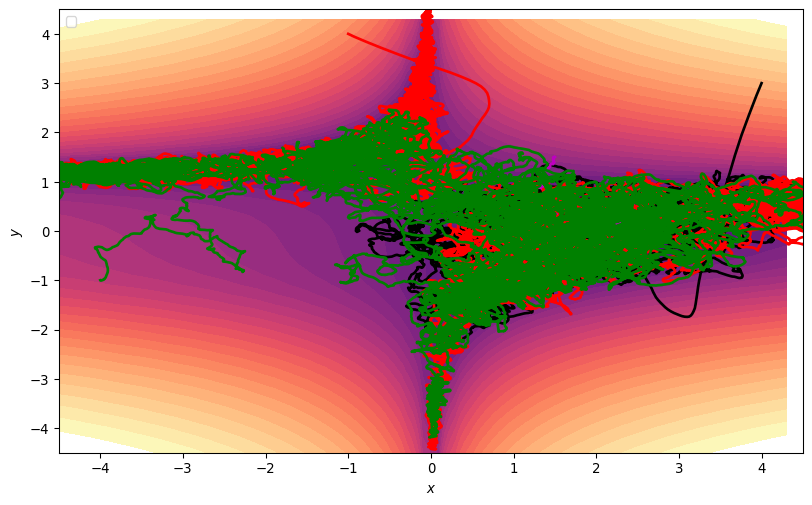
  • In 2D, can just add noise

Annealing

  • Noise can deflect you from the minimum when you are close
  • Common practice is to start with noise high, reduce it later
    • Simulated annealing (from metallurgy)
  • Even more common to start with high learning rate and gradually decrease it
    • Whereas in some ML applications increasing batch-size could cause overfitting

Adaptive Methods

  • We saw that hyper-parameters are hard to pick at outset
  • Ideal learning rate depends on condition number and also magnitude of gradients
  • Concept: Change Learning Rate as we go
    • Keep memory of gradient in each variable
    • Step in the direction of the average gradient
    • Decrease learning rate if variance is high
    • Increase learning rate if variance is low

ADAM

  • Adaptive Moment Estimation
  • Have a local estimate of average gradient \(\hat{\mathbf{v}}_i\)
  • Have a local estimate of squared gradient \(\hat{G}_{s,i}\)
  • Adjusted learning rate based on both: \[ \mathbf{x}_{i+1} = \mathbf{x}_i -\kappa \frac{\hat{\mathbf{v}}_i}{\sqrt{\hat{G}_{s,i}+\epsilon}} \]

When and Why is ADAM good?

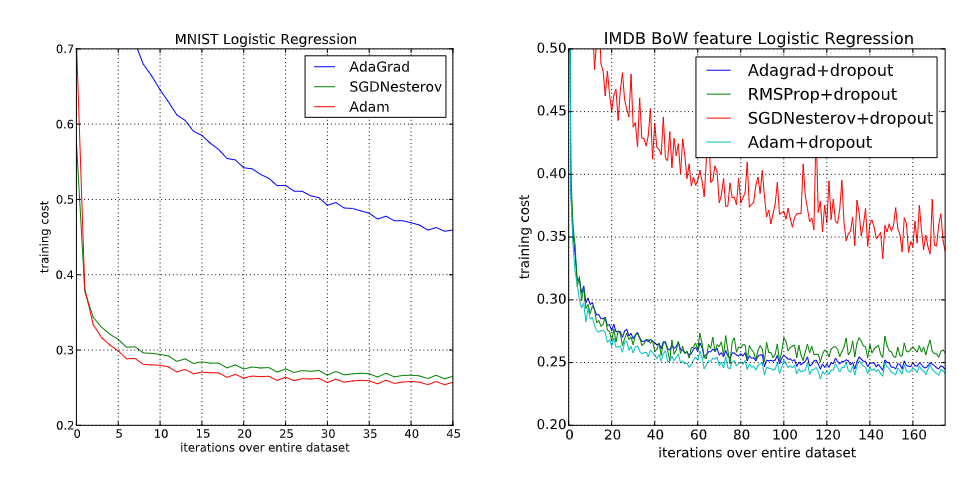
  • ADAM is much more robust to learning rate choices

  • ADAM is excellent when the gradient is sparse

  • ADAM is often the best in initial training stages

When is ADAM bad?

  • ADAM is perhaps the most widely used optimizer, the default for deep learning
  • However, it is not even guaranteed to converge on easy problems
  • Can generalize worse (need more regularization)
  • Less memory efficient
  • It is very heuristic in nature, can be improved

Inductive Bias

  • Machine Learning works best when structure of hypothesis set matches structure of target function:
    • Linear regression and linear relationships
    • Naive Bayes and feature independence
    • Decisions Trees bias towards specific features
    • Nearest Neighbors: Features contribute equally

Network Architecture and Inductive Bias

  • Fully Connected Networks don’t have much inductive bias
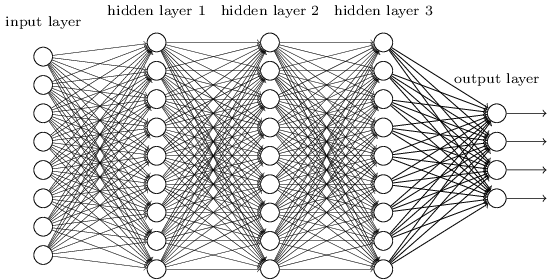
Image Recognition Bias and Symmetry

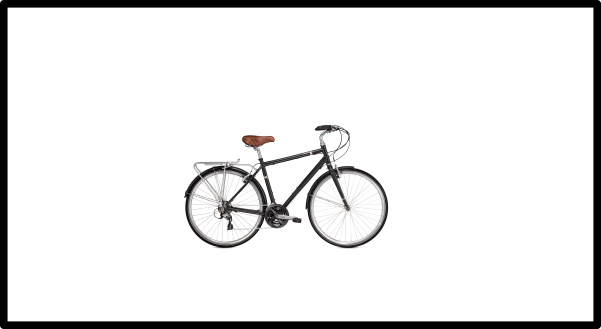
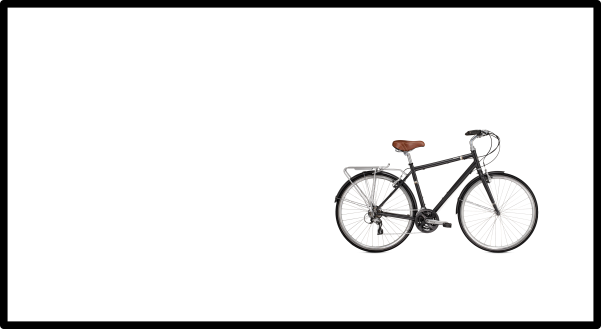
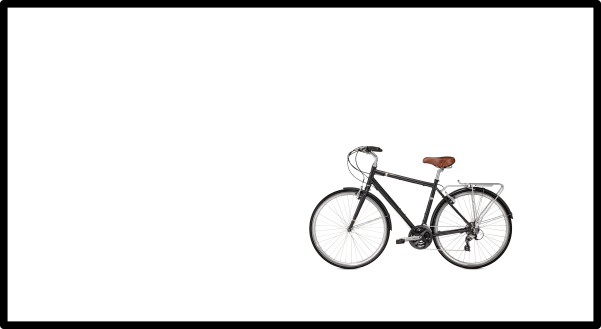
  • Neural Network for image recognition
  • This is a bicycle

Image Recognition Bias and Symmetry

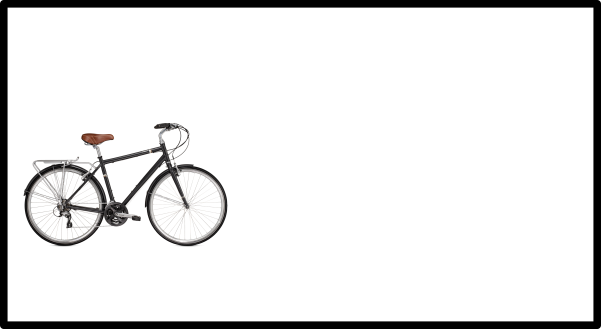
  • Neural Network for image recognition
  • If we shift it it is still a bicycle

Image Recognition Bias and Symmetry

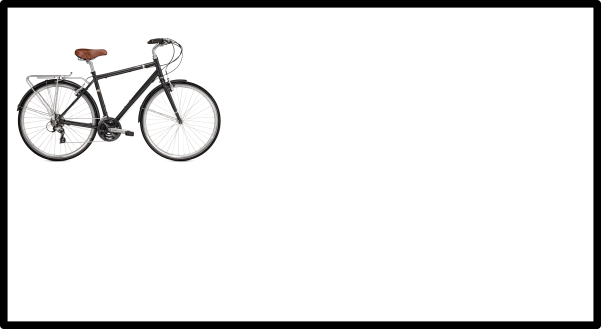
  • Neural Network for image recognition
  • If we shift it it is still a bicycle

Image Recognition Bias and Symmetry

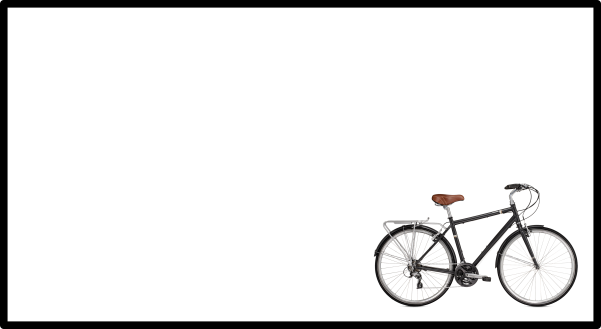
  • Neural Network for image recognition
  • If we shift it it is still a bicycle

Image Recognition Bias and Symmetry

  • Neural Network for image recognition
  • If we shift it it is still a bicycle

Image Recognition Bias and Symmetry

  • Neural Network for image recognition
  • If we shift it it is still a bicycle

Image Recognition Bias and Symmetry

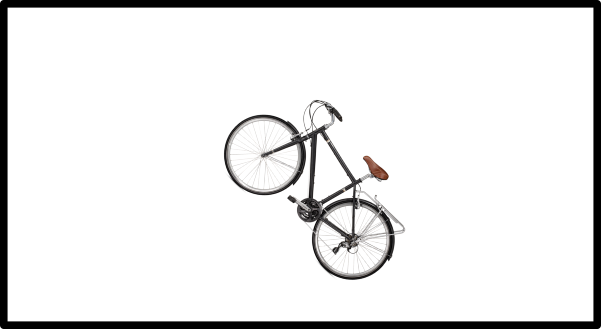
  • Neural Network for image recognition
  • We can even rotate it

Accuracy of Fully Connected Networks

  • Fully Connected Networks are not suited to image recognition
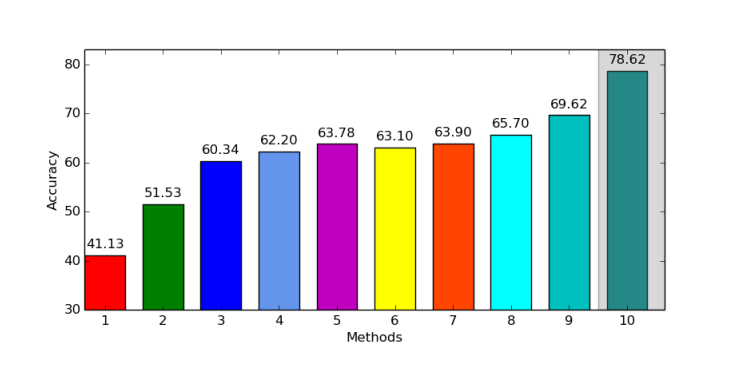
  • Small well designed neural networks exceed 90% on CIFAR10
  • Best networks exceed 99%

Convolution

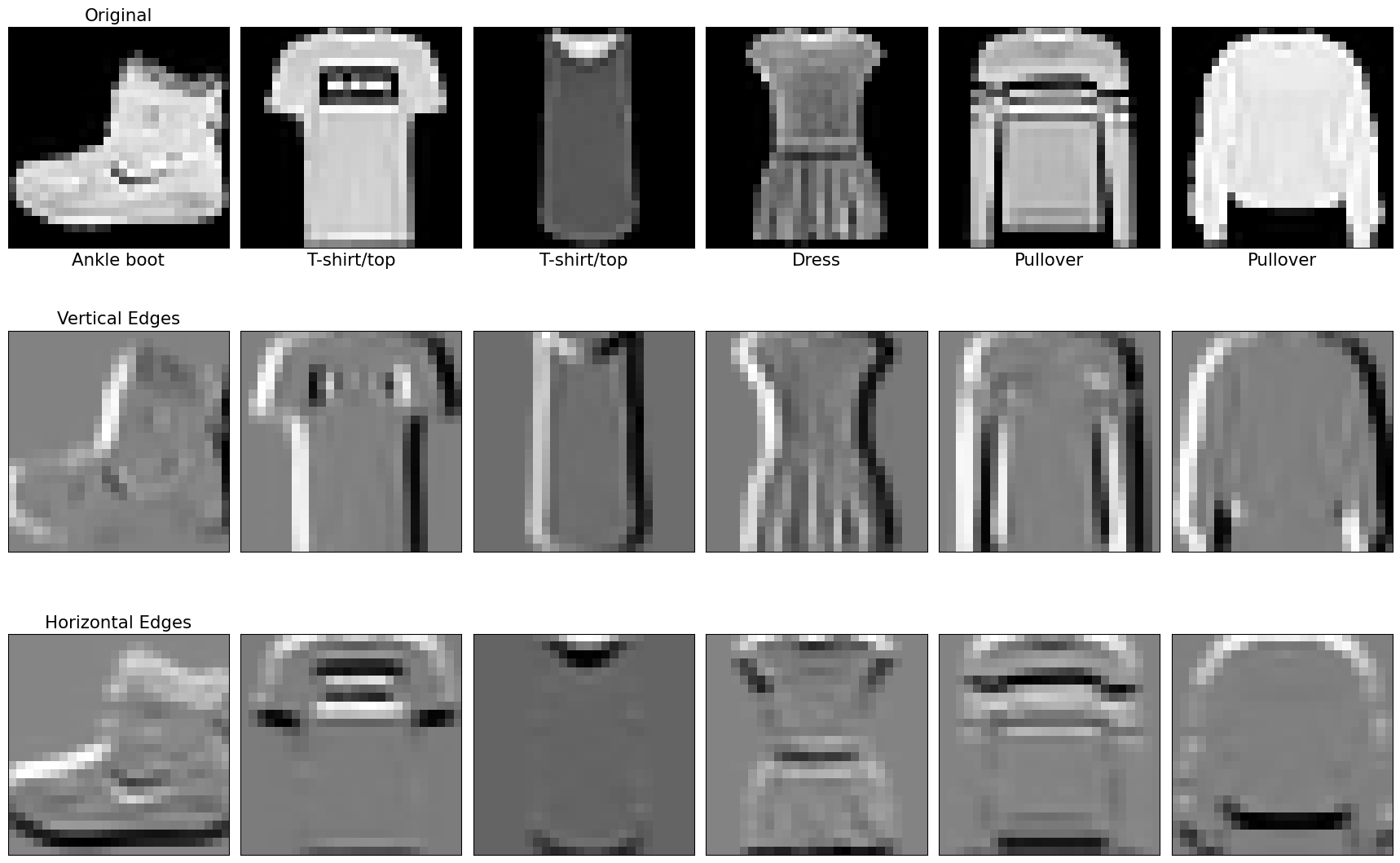
  • 1960s Q: How do we detect edges in images?
  • 1960s A: Create an “archetype” image of an edge, and calculate the correlation of it with each part of the original image
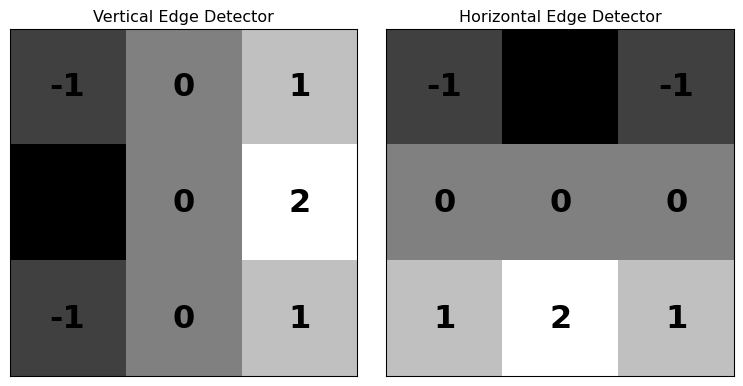
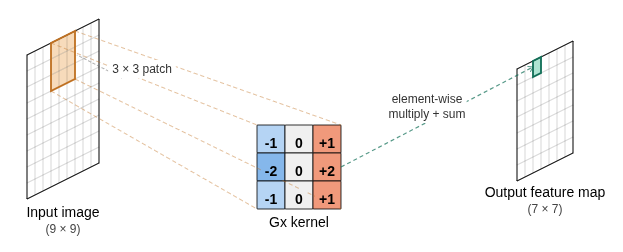
Applying the Convolution

  • The convolution ‘kernel’ is like a pattern that is applied all over the target image
Convolution in Practice
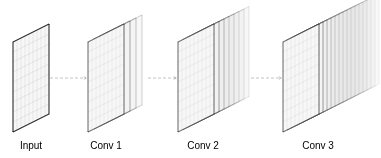
Convolutional Neural Networks

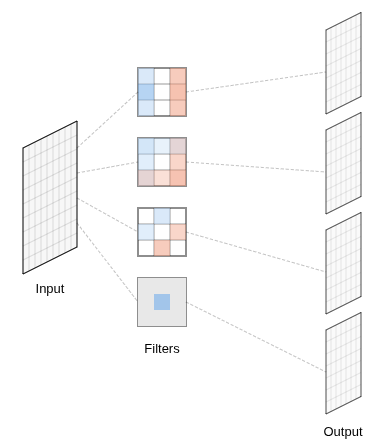
  • CNN Architecture:
    • Layers are small, learned filters
    • Feature map per layer

Convolutional Neural Networks

  • CNN Architecture:
    • Layers are small, learned filters
    • Feature map per layer
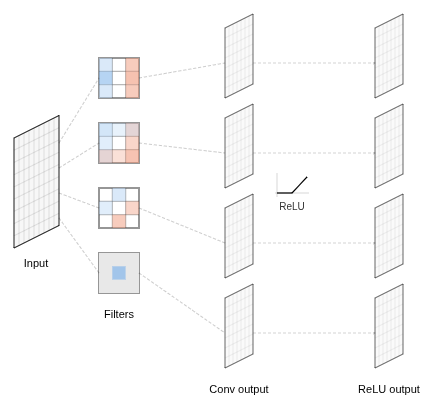
    • Apply ReLU to feature maps

Convolutional Neural Networks

  • CNN Architecture:
    • Layers are small, learned filters
    • Feature map per layer
    • Apply ReLU to feature maps
    • Stack Conv layers

Pooling

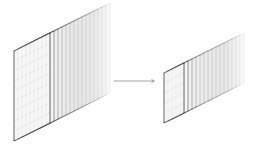
  • Convolutional layers dramatically increase the size of outputs
  • Max pooling layers reduce the spatial size
  • Look at 2x2 or 3x3 grid and pick maximum value
Full Architecture

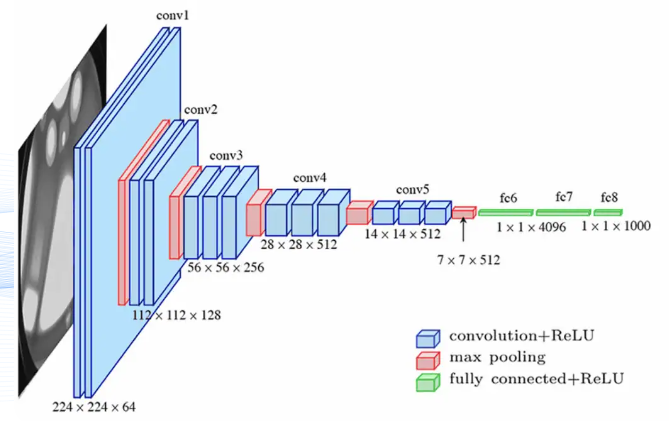
  • CNNs mix 1-3 Conv layers between max pooling layers
  • Have some fully connected layers at the end for classification
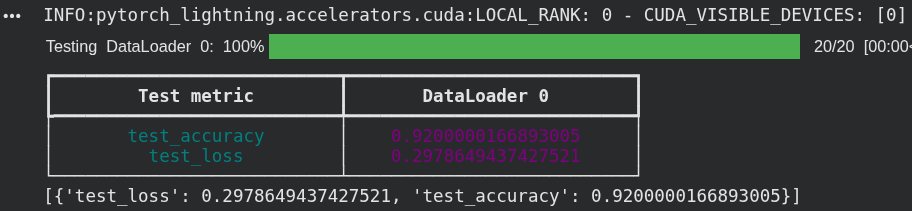
CNNs Outperform Fully Connected for Images

Fully Connected:
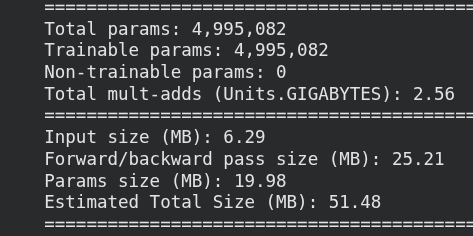
Fully Connected:
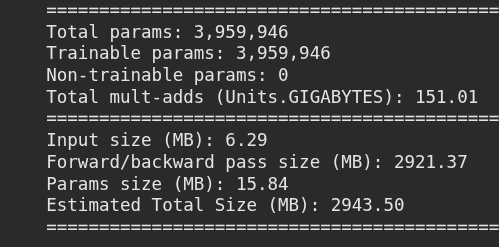
CNNs Outperform Fully Connected for Images

Fully Connected:
Fully Connected:
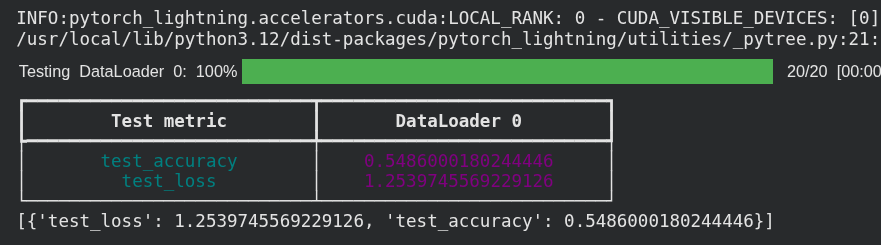
More Inductive Biases

  • Translation and Rotation
    • Convolution effectively reuses weights to handle translations
  • Slight change in colors, lightness/darkness
  • Image being partially obscured

Data Augmentation

  • Instead of modifying models, we modify training set with transformations!
transform_train = transforms.Compose([
    transforms.RandomHorizontalFlip(),
    transforms.RandomCrop(32, padding=4),
    transforms.ColorJitter(brightness=0.2, contrast=0.2, saturation=0.2),
    transforms.RandomRotation(5),
    transforms.ToTensor(),
    transforms.Normalize((0.4914, 0.4822, 0.4465),
                         (0.2470, 0.2435, 0.2616)),
    transforms.RandomErasing(p=0.5, scale=(0.02, 0.2))
])

Data Augmentation

  • Instead of modifying models, we modify training set with transformations!
  • Data augmentation is one of the most powerful “tricks” out there

Regularization: Dropout

  • To prevent memorization, randomly zero out a fraction of neuron weights during training:
    self.output = nn.Sequential(
        nn.Dropout(0.5),
        nn.Linear(2*2*512, 512),
        nn.ReLU(),
        nn.Linear(512, 100)
    )

Regularization: Early Stopping

  • Overfitting: Training loss decreases, validation loss is constant
  • Solution: Stop training if validation loss has stopped improving
early_stopper = EarlyStopping(
    monitor='valid_loss',
    patience=20,
    mode='min'
)

cifar_trainer = Trainer(
    max_epochs=300,
    callbacks=[early_stopper, ...]
)

Deep Learning

  • Over time, networks have become deeper
  • Empirically, they lead to higher accuracy
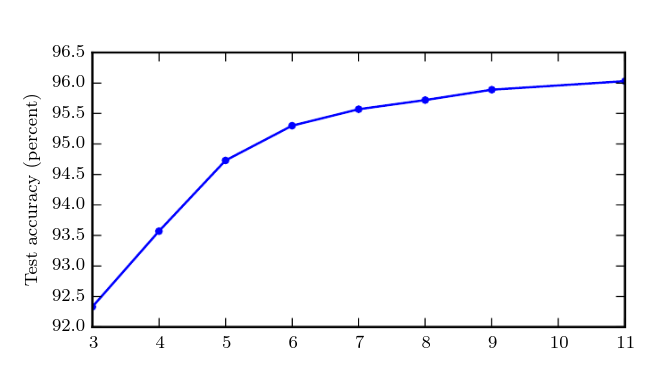
Goodfellow et al

Deep Learning

  • Over time, networks have become deeper
  • Empirically, they lead to higher accuracy
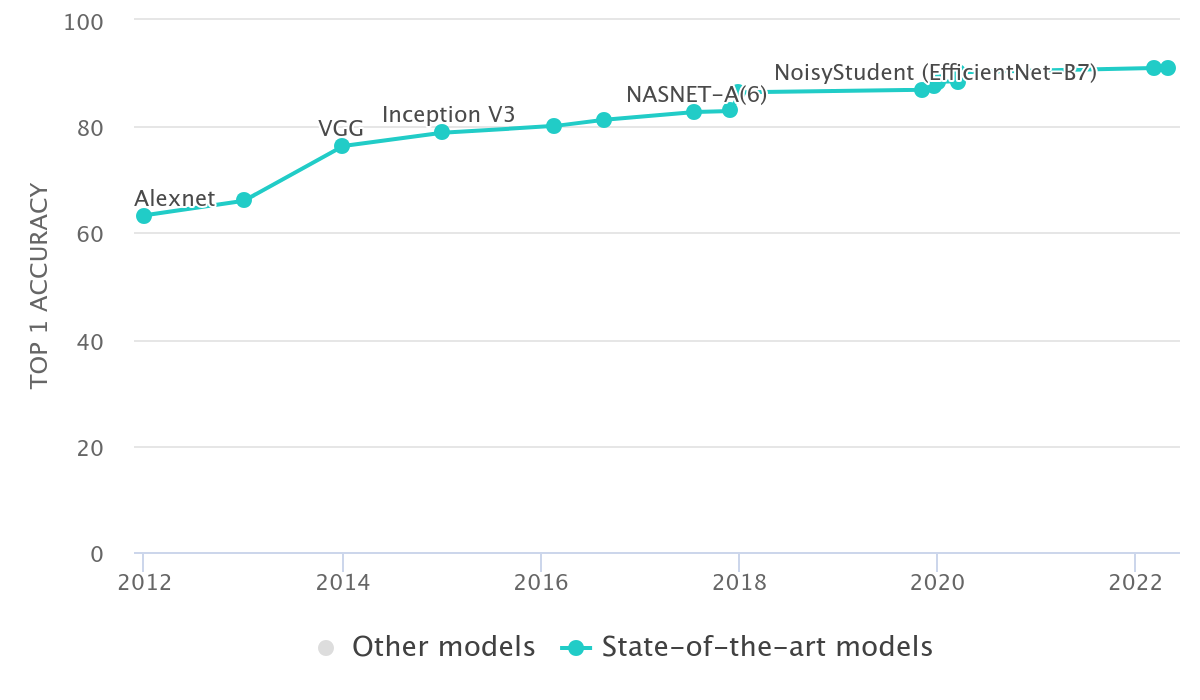
ImageNet Challenge

Different than more neurons

  • Scaling up neurons often doesn’t help in shallow nets
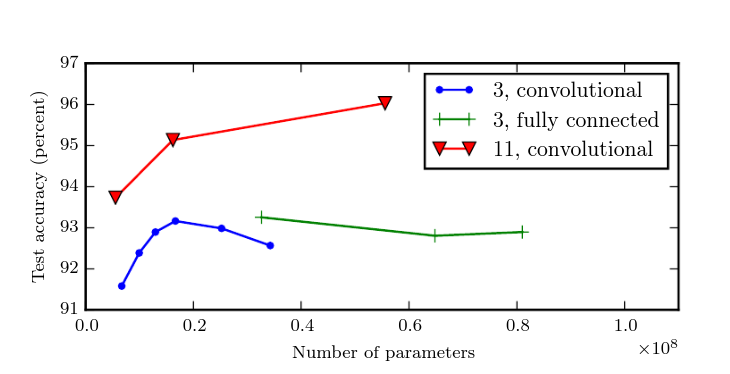
Goodfellow

Vashing Gradients

  • Landscape of deep network varies by layer:
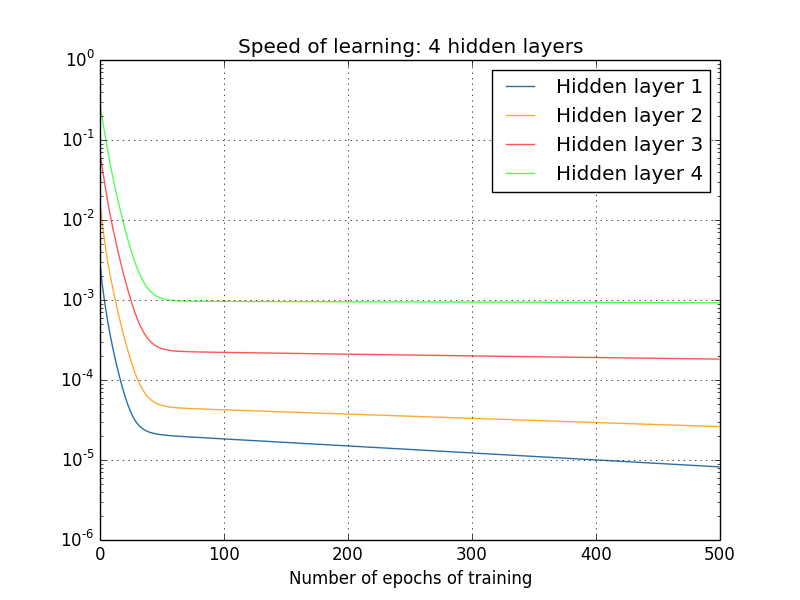
Nielson

Why Vanishing Gradients?

  • Consider a deep network with one neuron per layer:
  • If activation function is \(\phi\) can write it as: \[ f(x_1) = \phi \circ (w_n x + b_n) \circ \phi \circ (w_{n-1}x + b_{n-1}) \circ \\ \phi\circ \cdots\circ \phi \circ(w_1 x +b_1) (x_1) \]

Taking Derivatives

  • The close to the output, the fewer “terms” in the derivative:
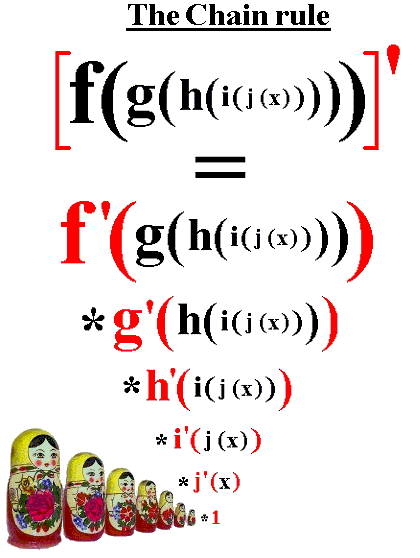
wikpedia

Solution: Activations

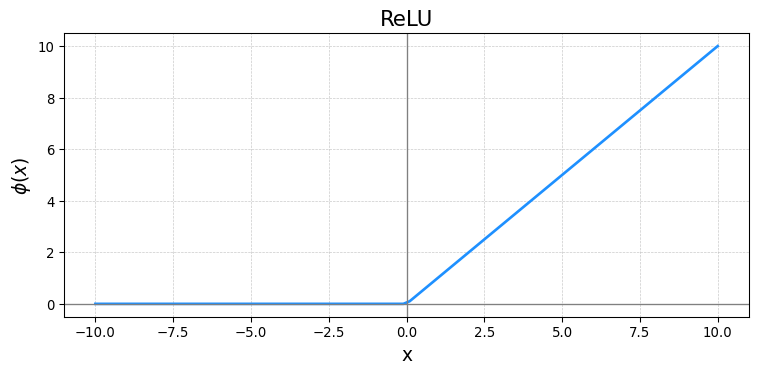
  • Rectified Linear Unit (ReLU)

\[ \phi(x) = \cases{0& \text{if} \quad x\leq 0 \\ x& \text{if} \quad x>0} \]
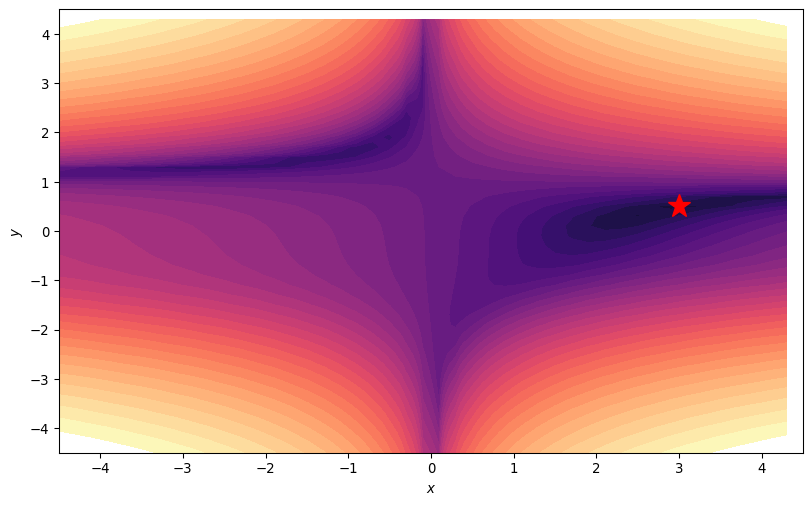
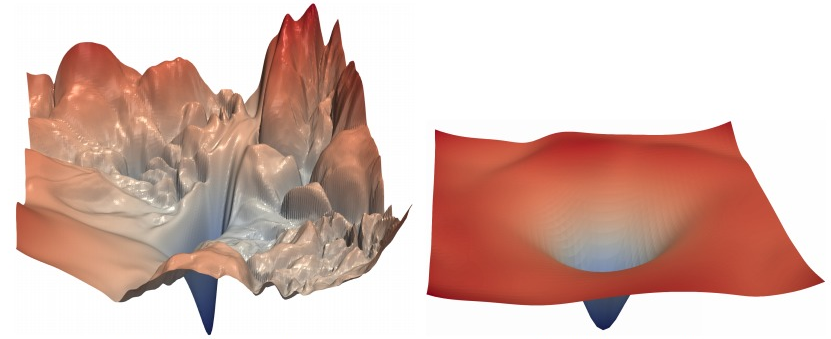
Spiky Loss Landscape

  • Ideally, as you move in the direction of the gradient the loss smoothly decreases
Batch Norm

  • Idea: Rescale the outputs of previous layer so that roughly 50% of neurons are active in subsequent layer
  • At each batch, and each forward step, rescale data so that mean = 0 and variance is 1
  • Learn an additional scaling parameter per layer
  • For evaluation, using running tally of activations at each layer for normalization

Batch Norm is a Type of Layer

    self.conv1 = nn.Conv2d(in_channels, out_channels, kernel_size=3, padding='same')
    self.bn1 = nn.BatchNorm2d(out_channels)
    self.conv2 = nn.Conv2d(out_channels, out_channels, kernel_size=3, padding='same')
    self.bn2 = nn.BatchNorm2d(out_channels)
    self.conv3 = nn.Conv2d(out_channels, out_channels, kernel_size=3, padding='same')
    self.bn3 = nn.BatchNorm2d(out_channels)

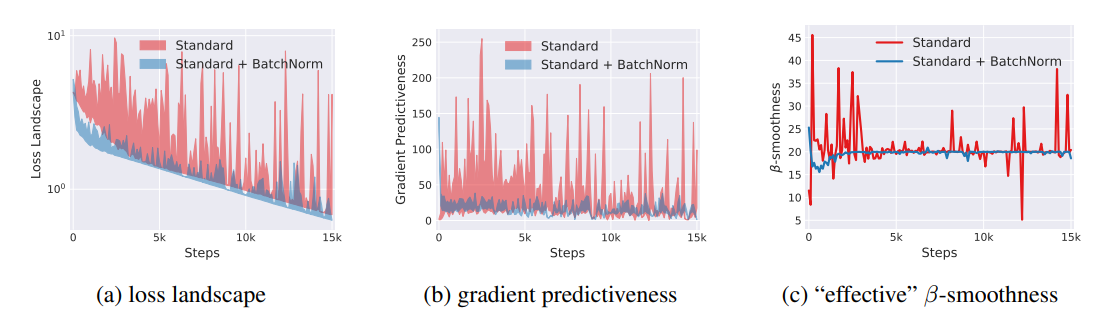
Batch Norm Enables Training Deep Networks

  • Batch Norm makes the loss landscape much smoother
Thanks